
“Mars is signaling a dark star”
A vision of "The End of the World" from the beginning of the 20th century

Who writes about “the end of the world,” and why? Sometimes the motivations (if not the authorship) are fairly clear: in many depictions of the “end of the world,” there are explicit moralizations and arguments, which are always about the present world and how it ought to either act, or think about itself in the longer turn of history. Fictional stories about the end of the world aren’t acts of prophecy — although they can be warnings — but they are often mirrors, of a sort.
Perhaps this is why, at least in my experience, stories about “the end of the world” that are dramatically removed in time from the present read so oddly. The issue is not that the fiction is so different from what one might find now, or the ideas so alien, but that the presumed audience is, well, not us. It is someone from over 100 years ago, in this instance: a short story, entitled “The End of the World,” that appeared in McClure’s Magazine in May 1903.
The author of the story, as indicated above, was Simon Newcomb, “professor of mathematics and astronomy in John Hopkins University, author of Astronomy for Everybody (1902).
Newcomb (1835-1909) has quite a Wikipedia page. Among his many accomplishments, he helped discover Benford’s law, helped make precise measurements of the speed of light, and wrote an entire novel of science fiction, along with many works of popular science. He also wrote essays for McClure’s that we might classify as “futurist” — attempting to predict the future, on the basis of his technical acumen.
Newcomb’s “The End of the World” is obscure enough that it doesn’t appear on his Wikipedia page, but I found a reference to it while researching another topic, and thought, let’s give this a whirl. You can read the entire story here (care of Hathitrust). What follows is my own summary of it, as well as some modestly touched-up and colorized versions of the illustrations that accompanied it, originally drawn by the French illustrator Henri Lanos (1859-1929).

The first line jumps us into the vibe of the story: “Mars is signalling a dark star.”
This tale takes place in a world thousands of years in the future, where there is little new science to do, little new technology to make, and international law and its institutions are so developed that everything in human affairs “went on as by machinery.” War is something that only happened in antiquity. Newspapers only cover true news, and in post-historical fashion, they occasionally only deliver a note saying that “nothing worthy of note has happened since our last issue.”
But there are inhabitants on Mars, but they have been known and communicated with for 3,000 years. Communication, here, means flashing extremely large (one-square mile) areas with very bright lights, in sort of an interplanetary Morse code.
The Martians appear to have no ability to communicate other than about astronomy. The Martians, it turns out, were better at astronomy than Earthlings, and would communicate when comets and novae made their first appearance. The rarest of these observations were of “dark stars,” which were “dark bodies,” many times larger than Earth, moving through space, coming from “far distant regions among the stars.”
These were so rare that people had largely forgotten about them, before Mars signaled — via their flashing lights — a new one had emerged.
It took some time for the Earthlings to locate the “dark star,” but in the meantime, the Martians appeared to be signaling frantically in ways that could not be understood. Finally, the Earth astronomers tracked the orbit of the “dark star,” and discovered that it had no orbit: it was falling into the Sun, and would do so in 210 days.
The Professor of Physics — they only had one, as they had essentially hollowed out the potential of the field eons before, at the University of Hattan, their largest city — was the first to understood what this would mean. He swore his assistants to the strictest secrecy, and related his theory about what was behind the brief flaring of stars (novae) that had been observed by astronomers for millennia:
The scientific men know that these stars were not really new. They were simply commonplace stars which, through the action of some cause that no one has yet brought to light, suddenly increased their heat and light thousands of times. … Now, my theory is that if one of these [dark bodies] chances to strike a star it bursts through its outer envelope and sets free the enormous fires pent up within, which burst forth in all their fury.
If his theory was correct, he reasoned, then the Earth’s Sun would also have its heat and light increased “thousands of times,” which would expose the Earth “to a radiation as intense as that in the focus of a burning glass, which, you all know, will not only set fire to wood, but melt iron and crumble stone.” And thus a “flood of heat” would destroy “all the works of man and every living being that exists upon the earth.”
What could be done about this? He didn’t know, but suggested that his assistants be ready to bring their “wives and families” to the university “at the critical moment, so that we can all take refuge in our vaults.”
And so the Professor continued in the meantime, telling no one else, but wondering whether he ought to. Perhaps it would be better, he reasoned, if everyone went to their death blissfully ignorant, since there was nothing they could do about it. “Why make them suffer for no purpose?”
But the strange, desperate Martian signals kept coming. The Professor of Physics was thus asked to publicly comment on whether there was any threat from the “dark comet” falling into the Sun. He suggested there might be, but downplayed it and suggested that practical precautions could be taken to reduce any risk of people overheating. The Professor of Logic (again, only one), then announced that since the Sun hadn’t changed its output before, there was no logical reason to suspect it might do it in the future, but that perhaps precautions ought to be taken anyway.
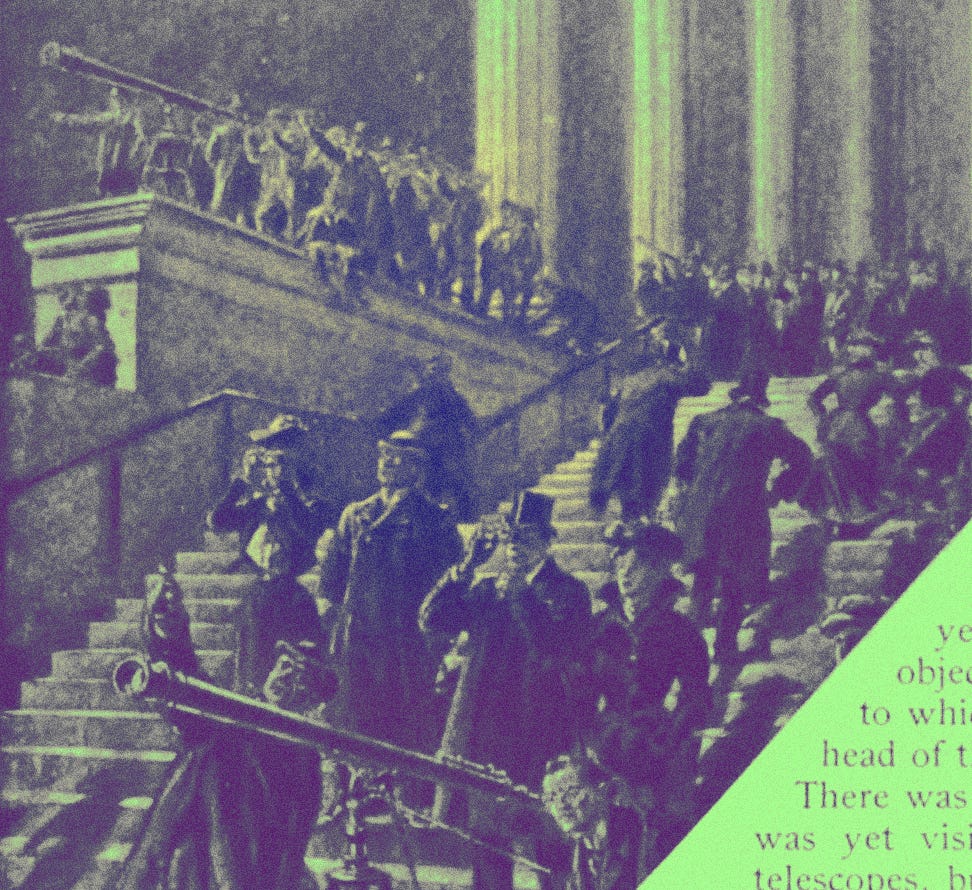
For months, people watched the skies. The “dark body” became visible to regular telescopes, and then even to the naked eye.
Now, however, the very slowness of the increase inflicted a slow torture upon the whole human race, like that experienced by a Chinese prisoner whose shaved head is made to feel the slow dropping of water. What is hardly noticeable at first gets farther and farther beyond the limit of endurance. The slowness with which the light of the star increased only lengthened the torture. Men could scarcely pursue their daily vocations. Notes went to protest on a scale that threatened universal bankruptcy.
Eventually the object, as it got closer to the Sun, grew bright enough to see during the daytime.
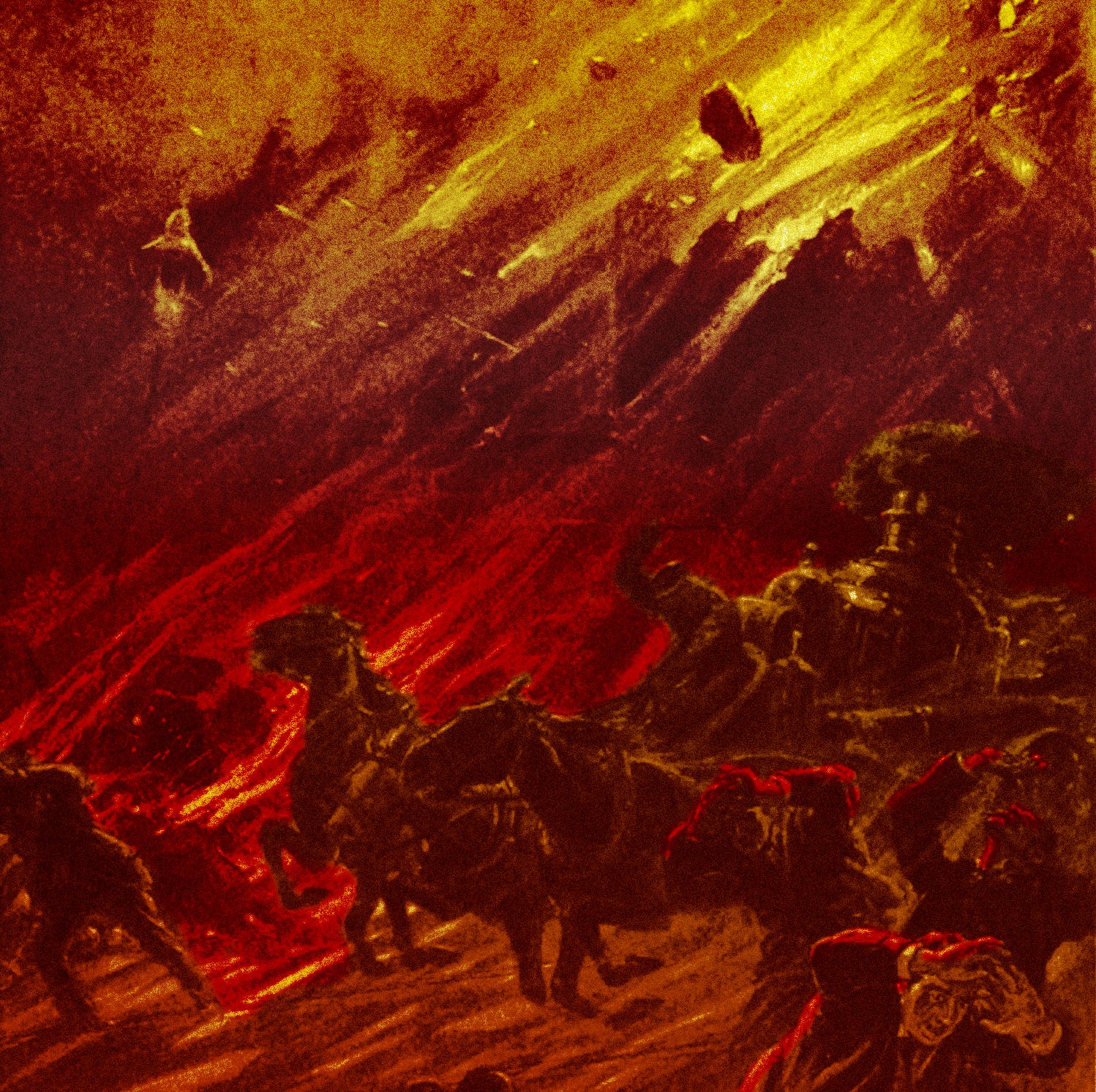
Finally, it falls into the Sun. At first, it is an anti-climax. But then a bright spot appears — and it starts to get warmer and warmer. By the next day it is unbearably hot.
News came from Europe that fires were breaking out, and entire cities are engulfed in flames. “It would soon become impossible for a human being to live in the streets.” With the heat followed other extremities: hurricanes of terrible force, and floods. The Americans, spared this by several hours, attempted mitigation — with some success, but only for one day. No further communication came from Mars. The oceans boil.
When morning came:
[The Sun’s] rays struck the continent like a fiery flood. As they advanced from the Atlantic to the Pacific everything combustible which they struck burst into flame, stones were crumbled by the heat, towers and steeples fell as if shaken by an earthquake.
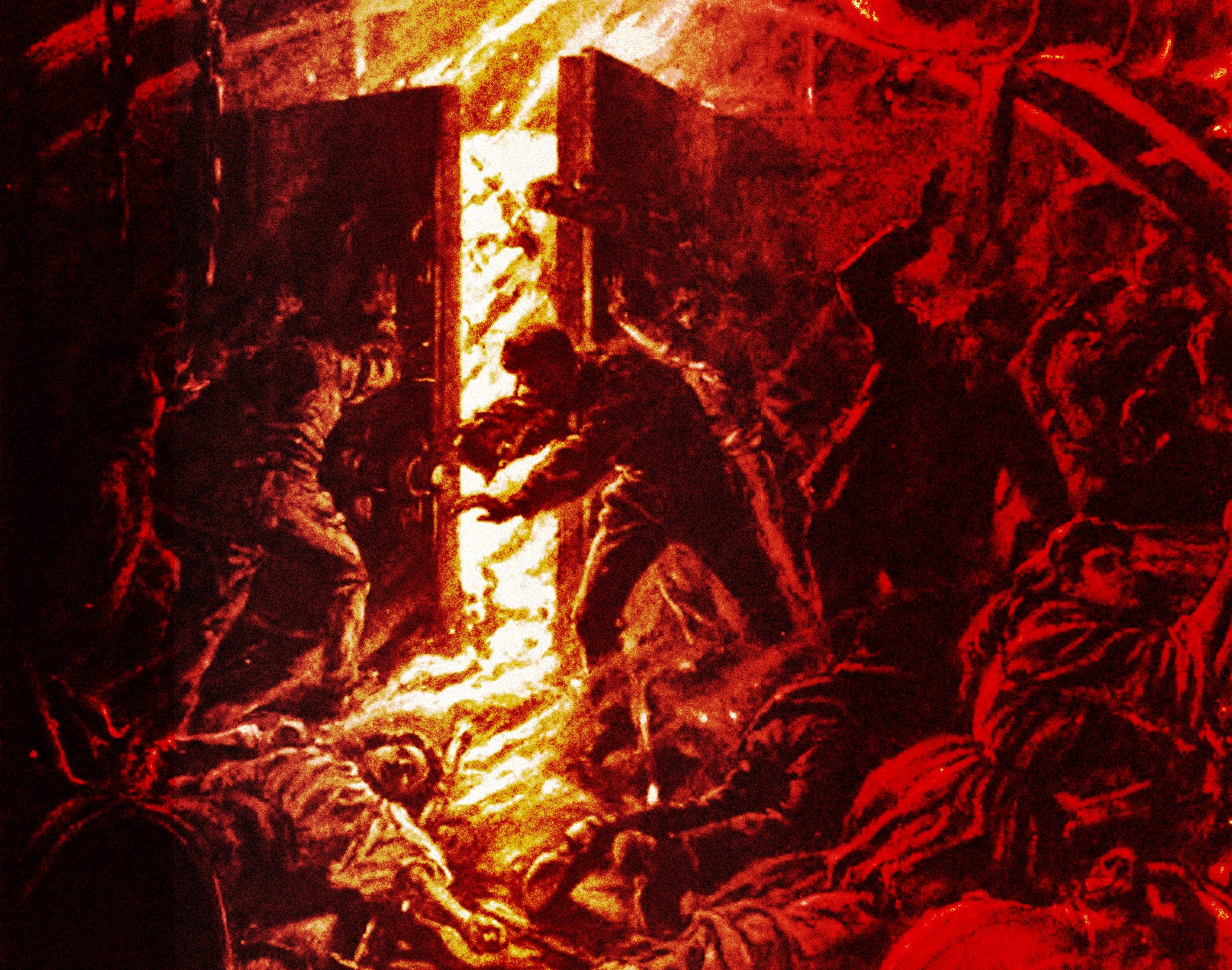
Men had to take refuge in caves or cellars or beneath any covering which could protect them from the fierce heat. Old and young, rich and poor, male and female, crowded together in the confusion of despair.
The Professor of Physics and his family (and assistants?) stay in their subterranean vault. The steel doors are hot to the touch. They despair:
The few survivors of the human race here huddled together could only envy their more fortunate fellow-men who, in the sleep of death, had escaped such an imprisonment as they now suffered. Had the question of continuing to survive been put to a vote, all would have answered it in the negative. Hope was gone, and speedy death was the best that could be prayed for. Only the conscience which had been implanted in the race through long ages prohibited their taking their own lives.
Still, they survive. They have two years of food and apparatus for producing oxygen for breathing. They despise the electric lighting, which they have in abundance, but understand is a lie: “They were in the regions of eternal night, except when they chose to turn on the current.”
Finally, after months, they venture out.
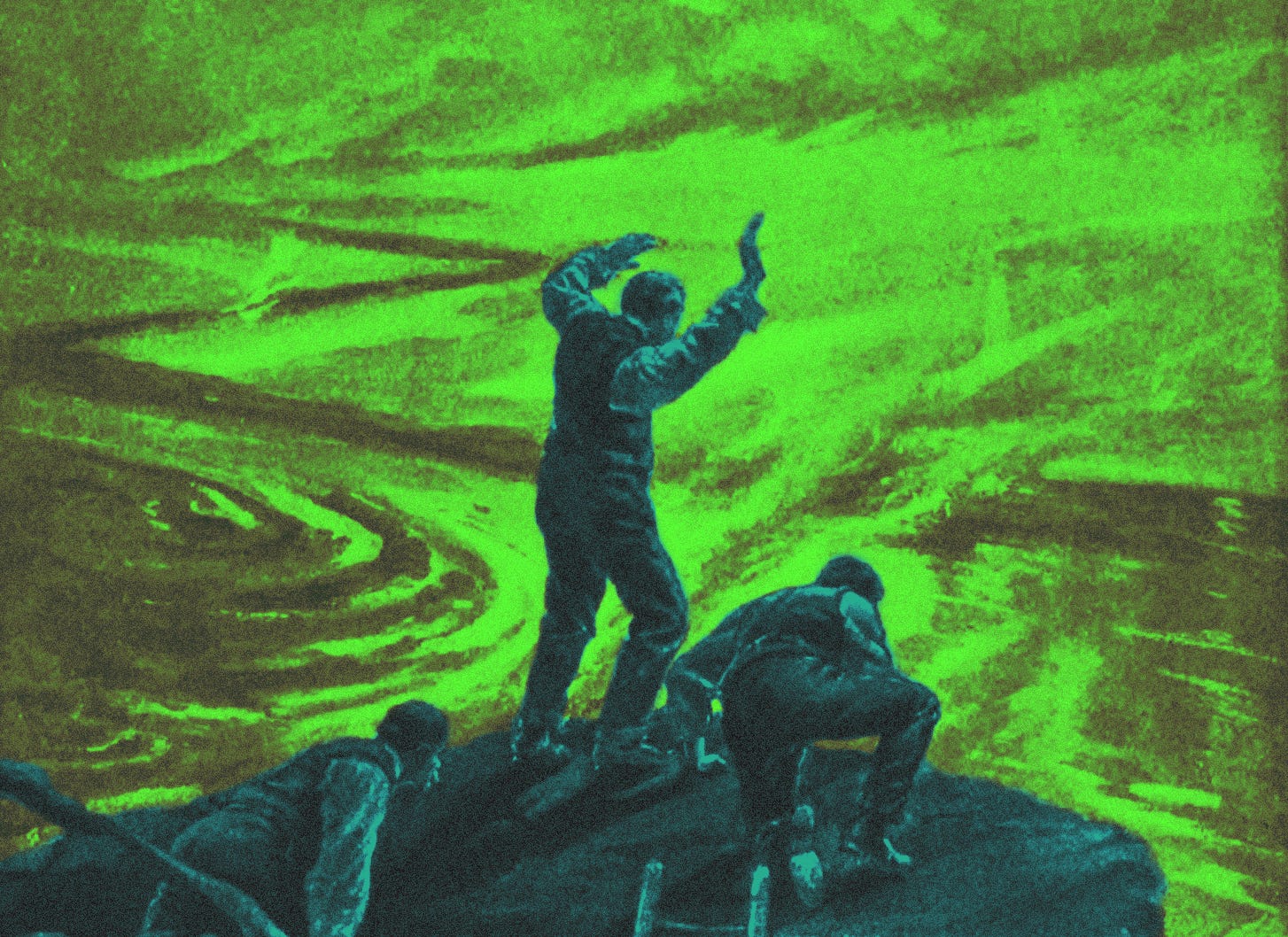
The first effect of the outer air was to produce an impression as of waking from a dream. But a glance over the landscape dispelled this impression in a moment. What they saw must be reality, though awful beyond conception. Vainly their eyes looked for the great city. No city, not even a ruin was there. They longed in vain for human help; not an animated being was in sight. Every vestige of man and his works—it might even be said every vestige of the work of Nature was gone. On three sides were what seemed great rivers of slime, while, toward the North, the region which had swarmed with the life and activity of the great world-center was a flat surface of dried clay, black sand, or steaming mud, in which not even an insect crawled. In the thick and vaporous air not a bird warbled its note.
And yet, they could not return to the vault, which they saw as a prison. But what to do? There was no one to contact. No where to go. No fields to sow. No way to repopulate the Earth.
Finally, the Professor gives a little speech:
“Such is the course of evolution. The sun, which for millions of years gave light and heat to our system and supported life on the earth, was about to sink into exhaustion and become a cold and inert mass. Its energy could not be revived, except by such a catastrophe as has occurred. The sun is restored to what it was before there was any earth upon which it could shed its rays, and will in time be ready to run its course anew. In order that a race may be renewed it must die like an individual. Unold ages must once more elapse while life is reappearing on earth and developing in higher forms. But to the Power which directs and controls the whole process the ages of humanity are but as days, and it will await in sublime patience the evolution of a new earth and a new order of animate nature, perhaps as far superior to that we have witnessed as ours was to that which preceded it.”
And with that — the end.
So what is this story about? The reference to a “flood of fire” feels like it is obviously meant to be Biblical in nature, but beyond that, it isn’t clear that there is any kind of moral here. There’s no message here, other than the idea that the universe might just contain some scary things. It’s more horror story than science parable, in that light.
Some of the themes in it are remarkably prescient for the rest of the twentieth century. Steel vaults where one might try to take refuge from global fire — but begin to feel like jail cells to those who are in them. The envying of the dead (more on that theme in my next post). The realization that a modern Ark with a modern Noah is going to be a hopeless idea. And the strange attempt at something like acceptance at the end, which feels surprisingly modern in its near nihilism.
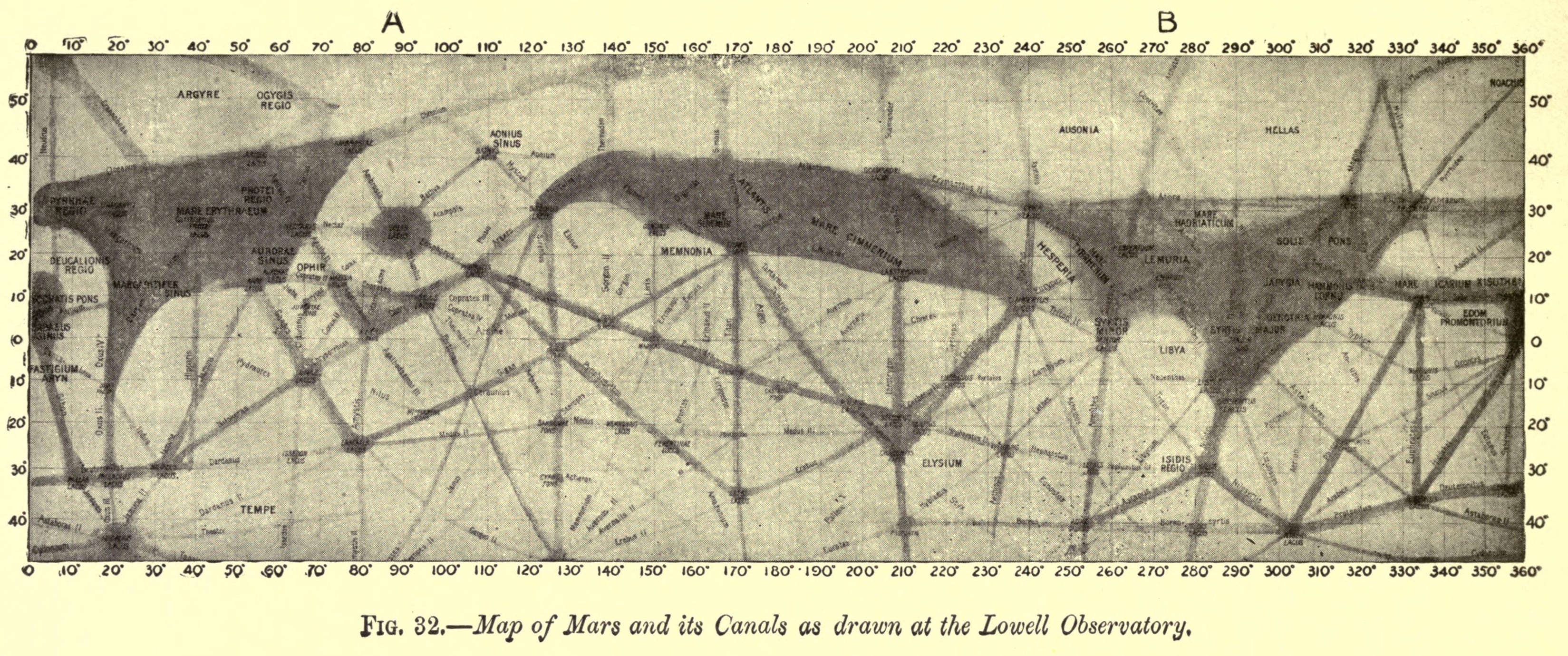
There are two aspects of the scientific context in which it was written which are of some interest. One is that I don’t think Newcomb believed there were people living on Mars. His Astronomy for Everybody goes into some effort to debunk the idea that the “canals” on Mars (all the rage at the time) were extraterrestrial in origin, and he similarly throws cold water on the idea of anything living on the Moon:
If we supposed animals to walk about on the moon, it is difficult to imagine what they could eat. Our general conclusion must be that there is no life on the moon subject to the laws which govern life on the surface of this earth.
Separate from that, it seems noteworthy that the story postulates Martian life, but the Martians play very little role in it, other than sending a (hopeless, unhelpful) warning. This is not a story about alien war — it is a story about aliens who find themselves just as helpless as we are.
The other thing is the nature of the Sun, which plays a large role in “The End of the World.” Newcomb’s story was written well before the idea that the Sun was powered by nuclear fusion had been hypothesized (that would be in 1920, well after Newcomb had died), and his Astronomy for Everybody primarily discusses the Sun in terms of the Kelvin–Helmholtz mechanism. The key thing here is that this implies that it is not that old, and that it will not last that long:
Therefore, if this view is correct, the life of the sun must have a limit. What its limit may be we cannot say with exactness, we only know that it is several millions of years, but not many millions.
This feels like the germ of the impulse to write an “end of the world” story, in a sense — the idea that the modern, 20th-century, scientific view of things is that life is finite, the universe is harsh, and there is no reason to think that we are a special set of creatures who will persist forever. Rather, as the Professor indicates at the end of the story, extinction is the rule.
So what’s the lesson, here? This story takes place after man has mastered all science, and all technology, that is there to master. He has found intelligent life. He has found a world in which there is essentially no news, because all is so well controlled. And then the universe, for no reason at all, throws him a curveball, and wipes him out. And that is the end of the story. Is there anything one can do about it? Only accept it.
It’s a grim tale — but perhaps Newcomb, only 5 years from his own death, was in a grim mood.
Not the point of the story at all, but I’m pretty sure it would have indeed made a lot of difference in the story had the Professor warned governing bodies or the public. Clearly survival was possible, so (assuming the sun is still functional at the end) bringing various microbial, fungal, and plant species into the arks or otherwise creating refuges for them seems it would have made a lot of difference.
I think this is paralleled in the modern apathy in most peoples mind’s towards any sort of preparation and individual or communal adaptation towards threats like climate change, nuclear war, peak oil, etc, where most in the government on down to the average citizen would rather not know and are just content to throw their hands in the air and assume someone else is on it or it won’t affect them personally.
I wonder if Larry Niven had come across this piece by Newcomb prior to writing his end-of-the-world short story _Inconstant Moon,_ published circa 1970.