
Wasteland wrap-up #67
A good review of my book, another London trip, some things I've been reading and watching, a long list of reasons not to use nuclear weapons...

A reader last week helpfully alerted me to the fact that a review of The Most Awful Responsibility written by Errol Morris had been posted to the online publication Air Mail. Morris is an Academy Award-winning director of documentaries, and I have seen just about everything he’s made over the years. I believe that Mr. Death (1999) was the first one that I saw, and I loved its complicated subject matter: an inventor of a lethal injection system who later became a disgraced Holocaust denier. I saw The Fog of War (2003) in theaters several times, use it in my teaching regularly, and think about it often.
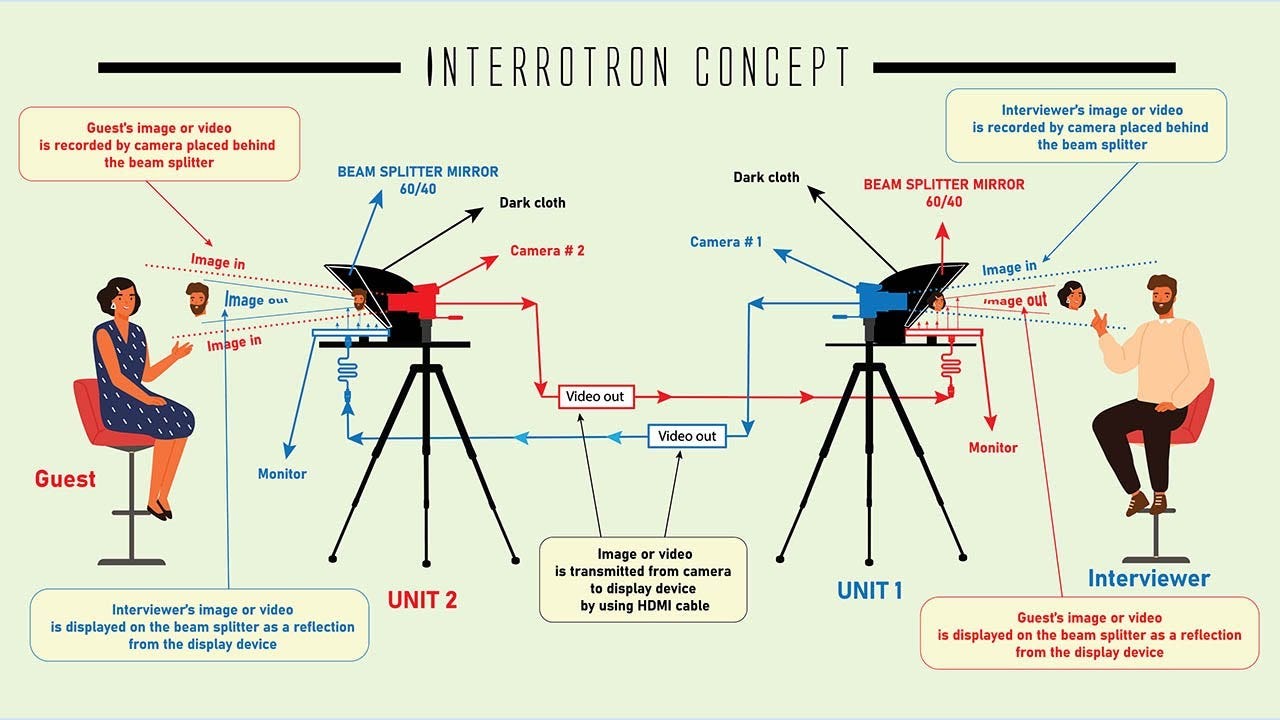
Aside from the content of The Fog of War, which is probing and provocative, I also delight in talking to students about The Interrotron, the unique camera setup that Morris used for the latter film to impressive effect at capturing his conversations with Robert McNamara in a shockingly intimate fashion. The Interrotron is a system of two cameras and two teleprompters looped together so that the interviewer and interviewee can make constant eye-contact. It leads to a very different experience for the interviewee, as well as capturing that sense of eye-contact in the final filmed product. I have always thought it is was a painfully, agonizingly clever and simple solution to a major deficit in most interviews.
All of which is to say that being reviewed by Morris is quite a thing for me by itself, as he is an artist I have long admired, and whose work has been formative in my own thinking about the possibilities of documentaries, and epistemologically-informed history. (Morris also was a graduate student of Thomas Kuhn’s, many years ago, and they had a spectacular falling out, which Morris has written about, so there is a history/philosophy of science connection there, as well.)

Morris’ review of the book is, as one colleague of mine put it, “as good as a review can be.” My colleague continued: “Morris gets you, Alex.” I find it difficult to read reviews of my own work (even positive ones), much less send them to others, but I do feel seen in this review, as Morris very much understands the kinds of epistemological sensibilities I have regarding the writing of a history like this, and believes (rightly or wrongly!) that I accomplished my goal with it. Says Morris: “It’s a truly great book, perhaps a masterpiece, that gets us as close as we can to understanding what went through Harry S. Truman’s head when he presided over the bombing of Hiroshima and Nagasaki.” Ah, who could ask for more in a reader!?
You can read his review here, if you are inclined, and if the paywall is getting in your way (and you are still interested), I will post a PDF copy below, just for you.
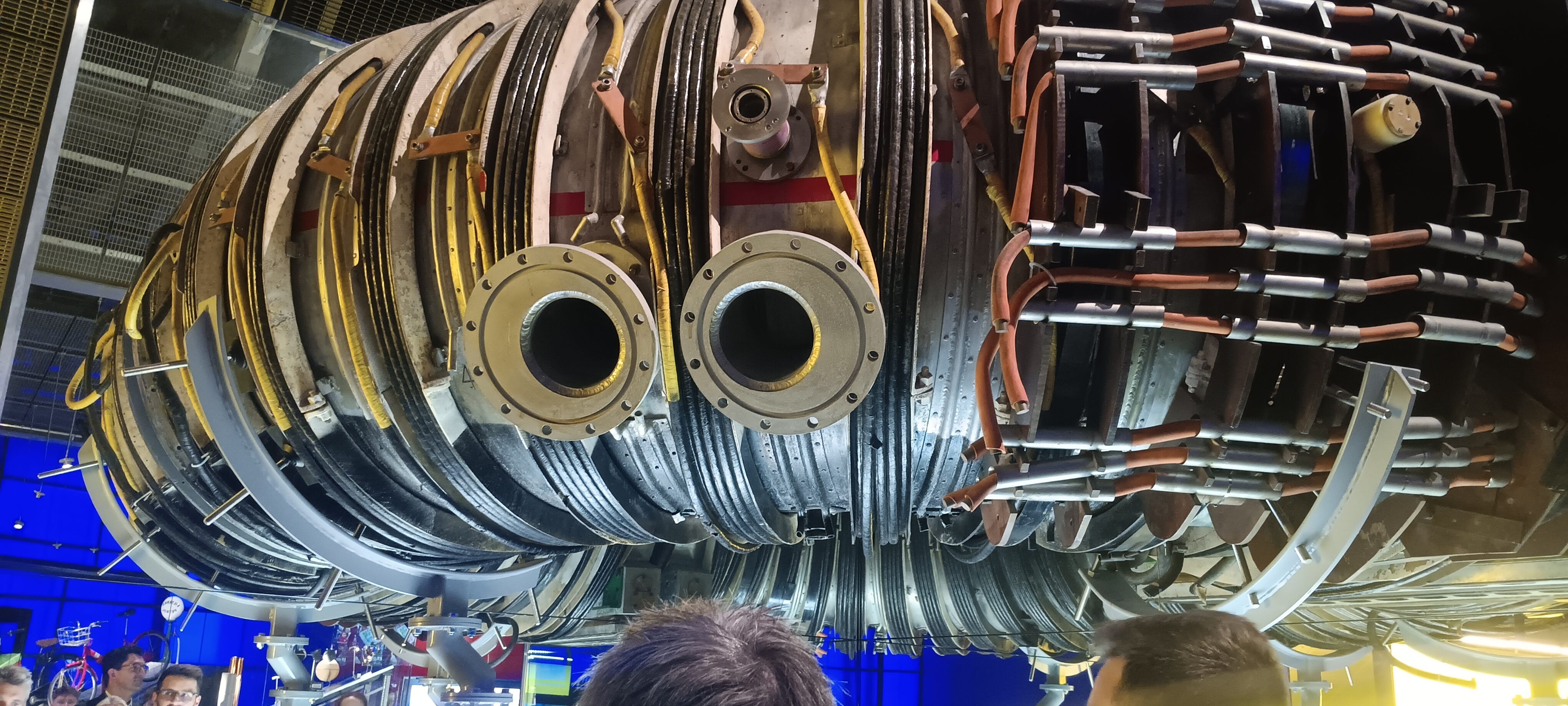
Last week I was in London again, this time for a workshop at the Science Museum that was dedicated to the questions of preserving JET, the Joint European Torus, a fusion research facility located in the United Kingdom that has served out its life and is in the process of being decommissioned. It was an interesting discussion.
My main contribution was a) giving a talk about the classification aspects of “peaceful” nuclear fusion over the years (both magnetic, like JET, and inertial confinement), much of which was derived from my first book, and b) an attempt, at the end, to encourage the “there’s no money for anything anymore” Brits that they should try to think a bit bigger than just “can we saw off a piece of the machine and put it in a museum and put the data in an archive somewhere,” all of which is good and fine but really seems like the bare minimum. I know there’s no money for anything, etc., but one might as well try to start by thinking bigger. But these are the moments in which I feel the most American in European contexts, when I don’t start with the assumption that there can’t be any money found for anything…
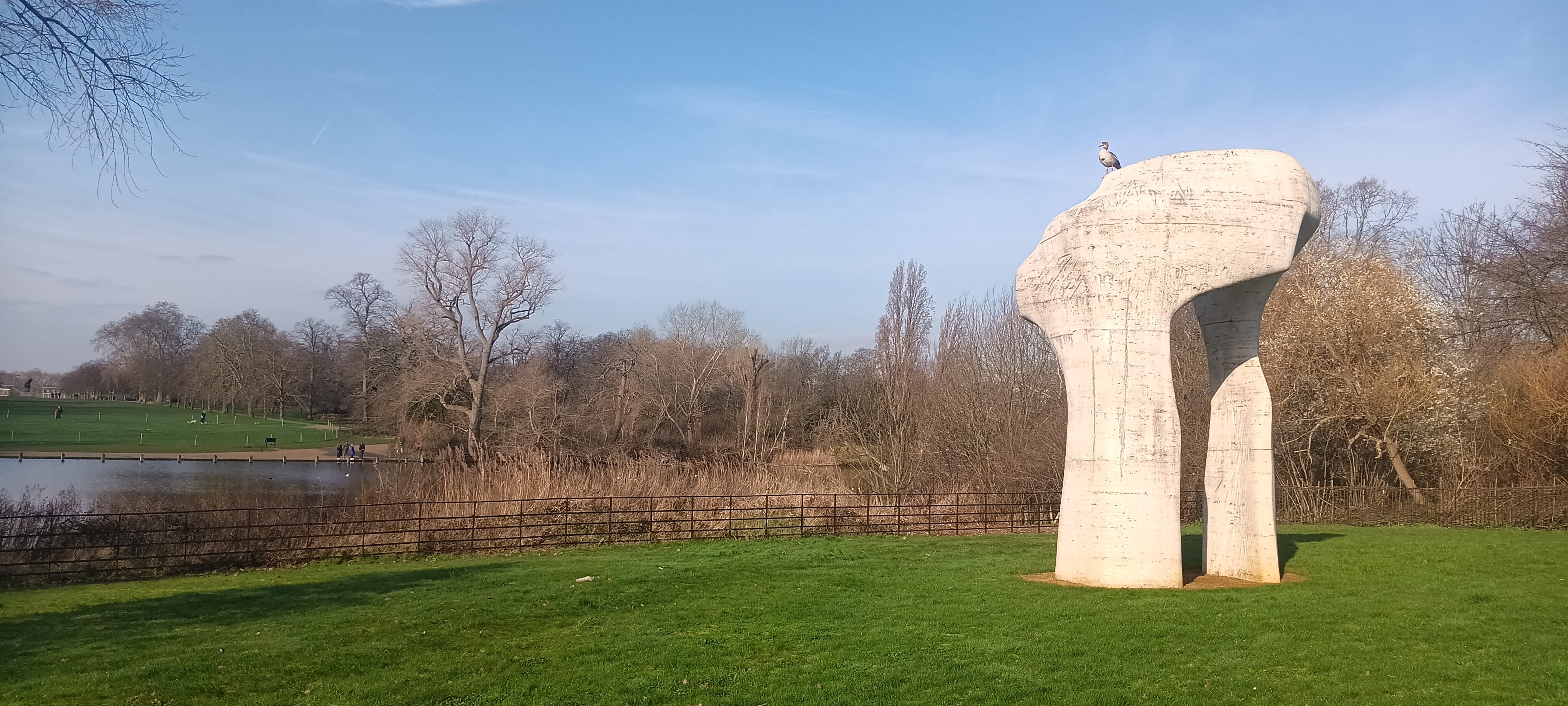
It was just a day-trip this time (no coffin hotel), and because of Eurostar shenanigans I had to get there a few hours earlier than I had intended, so I went for a walk in Hyde Park and Kensington Gardens (which are both near the Science Museum), which was very nice.
A sign there told me that in the daytime, one could frequently see tawny or small owls in trees near their favorite holes, and that sounded quite fun to me, so I kept an eye out. Every time I saw a bird in a tree, though, it always turned out to be a pigeon or, improbably, a duck. I felt a little like the sign was, as the Brits say, “taking the piss…”

The weather has been lovely in Paris — basically springtime. I really did not expect the winter to be so short and relatively easy here. I guess I expected that because we are so far north — Paris has the same latitude as Newfoundland — that it would be more like Boston than New York. But it has been easier than even New York, I think. It is 60ºF / 16ºC today, and sunny. There’s lots to complain about the world right now, but the weather here isn’t one of them…
For Doomsday Machines this week, I returned to a document that I wrote about for Restricted Data some years back: the earliest formal American study I have seen, from August-September 1945, of what a nuclear attack on the Soviet Union might look like. It’s not a “war plan,” per se, but it gives insights into what the military thinking behind an atomic “war plan” of that period would look like:

I hemmed and hawed a bit about whether I should “re-use” a document or not, and decided that given the different scope of Doomsday Machines from Restricted Data, I could probably make an argument for it, and that I was looking at it again with “fresh” eyes, ones that have now looked at many more “war plans” (or at least, “war planning documents”) than I had at the time. I also have much better microfilm scans than I did at the time, so that’s something. For many readers, I suspect the truly terrifying and depressing thing about this document is not its contents, but the fact that the last time I wrote about it was 2012, which was 14 years ago… yikes!!!
Keep reading with a 7-day free trial
Subscribe to Doomsday Machines to keep reading this post and get 7 days of free access to the full post archives.