

Today the time changed to daylight savings time in France, several weeks after it did in the United States. We’re now on “summer time,” which feels a bit premature, but I will take it.
A strange thing: France is on Central European Time (GMT+1), not Greenwich Mean Time (GMT+0), despite being much closer to the latitude of the United Kingdom than, say, Germany. The consequence of this is that “solar noon” is considerably diverged from “local noon” here: we’re an hour or more later than the Sun. So instead of the Sun being overhead at noon, it is overhead at 1pm (13h) or even 2pm (14h).
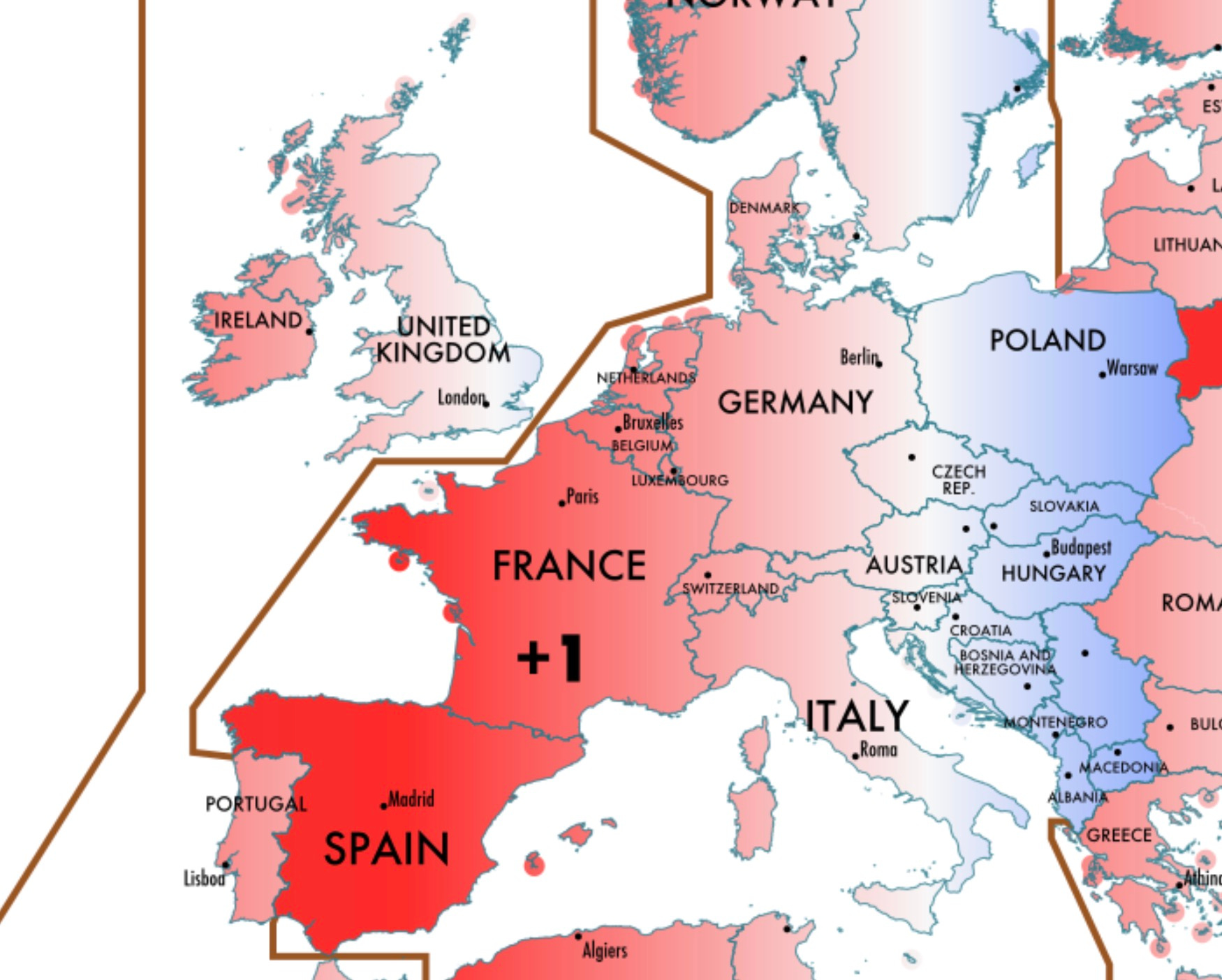
Why is this? I found a blog post on this from a few years back; I have not tried to independent verify it. It says, in brief: Paris was on Greenwich Mean Time from 1911 until 1940, when the Germans put it on Central European Time — Berlin time — during their occupation of the country. This was not uncommon during the war, as a simplifying measure (the Potsdam Conference was on Moscow time, as it was in Soviet-occupied East Germany). Actually, it was even a little weirder than this: in the early part of the occupation, only the northern part of France was under direct control of Germany (“Occupied France”) and the southern part was autonomous under a pro-German puppet state (“Vichy France”). Only the northern part switched to CET, so the country had two time zones split by their political status. When the Germans officially occupied Vichy France in 1944, then it also switched to CET.
When the war ended, France maintained CET (year-round; it did not have summer time until the 1970s). Apparently there were some “patriots” who referred to switch back even during the war.

All of this is very odd to me. Your sworn enemy occupies your country, changes the time zone for their convenience to one that does not align well with the Sun, and after they have been evicted, you keep the “off” time? This is famously-independent, famously-standardized France we are talking about, too.
It isn’t just France that’s on the “wrong” time zone, it’s also Spain, which is tremendously “off” from solar time as it is also on CET. They also adopted CET during World War II, by choice, and have kept it ever since.
Apparently the total coordination of time zones and adoption of DST was only done in the 1980s and 1990s. I would not be surprised to learn that this was a question of European unity — the idea that many things would be facilitated if one knew that the continent (minus Portugal!) was on the same time zone. But I haven’t dug into that at all; it is just a hunch.
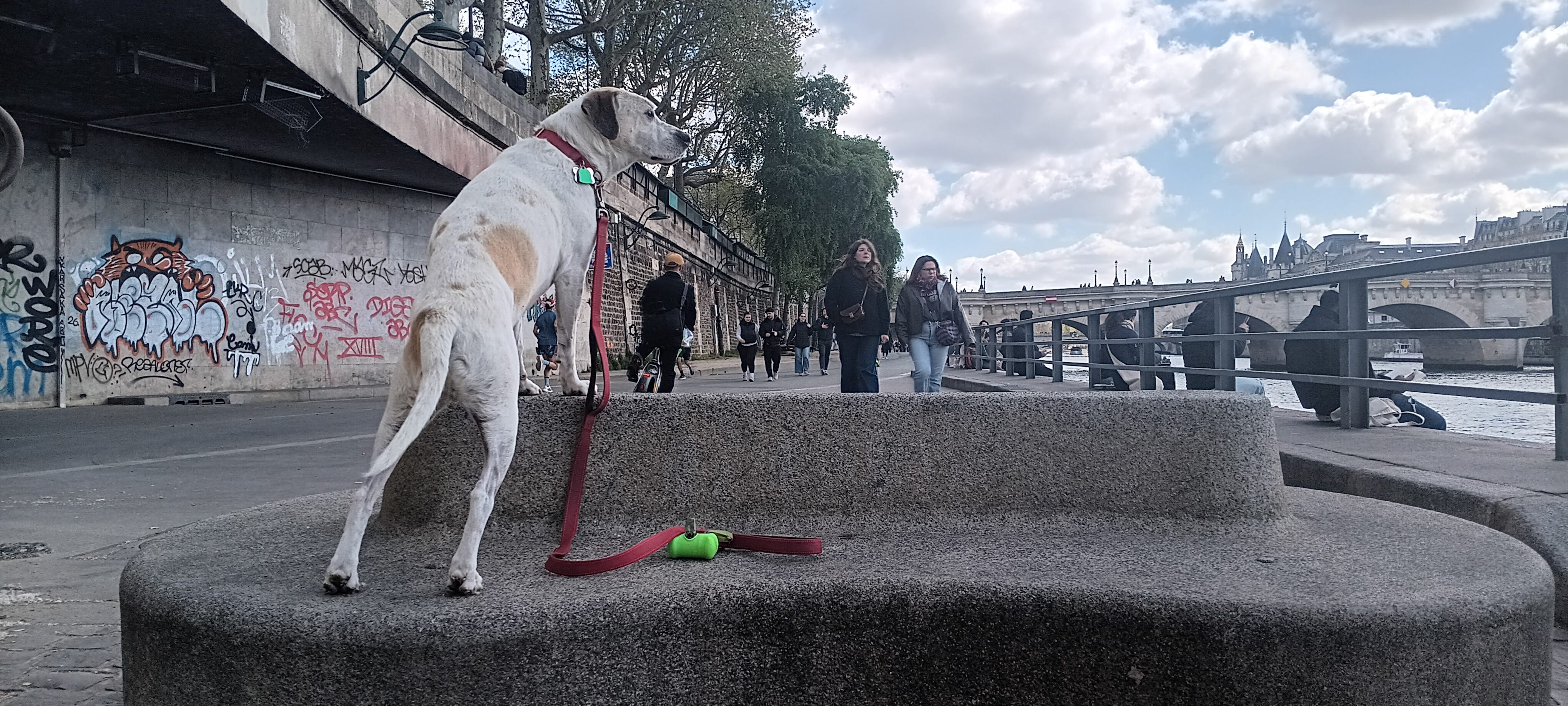
Now, many people here (including in my household) like the fact that Paris is on CET, because you get a much longer day, at the expense of a darker morning. I’m not necessarily objecting to that.
But I still find it strange that the French maintained German time after the war. I suppose there’s a deeper idea buried in there: some times when things change, they can never quite go back to what they were.

This week, among other things, I’ve been trying to fix up some things with MISSILEMAP. The main motivation is financial — every once in awhile it gets enough traffic that it costs me money to maintain it (thankfully paid by a grant), because it is still on Mapbox, which is very expensive, and I would like to switch it over to the Protomaps system I developed for NUKEMAP. And the excitement about missiles earlier this month drove it into territory that is going to cost my grant a little bit — which is grant money I’d rather spend elsewhere, to be honest.
But that’s not as easy as just flipping a switch, because MISSILEMAP was coded up quite some time ago. And while I am in there, “under the hood,” I see lots of other things to improve. One of them is to use a more robust Circular Error Probable function that will allow advanced users to do things like have non-circular CEPs (ignore the apparent linguistic contradiction). And I’ve been looking at implementing a time-of-flight estimator as well (which, to do well, is much harder than you might imagine). I’m hoping to have a little update with these things (and a few rough edges polished off) in the next week, with any luck.
For Doomsday Machines, I wrote up a short piece on “un-inventing the bomb”:

It’s a topic I mentioned on here a few weeks back, as it came up during my teaching, and as I was mulling it over I realized I could tie it in with A Canticle for Leibowitz, so I just wrote it up. And I do love the unreality of photos of aerogel (above). I had another blog post almost ready to go, an interview, but I am delaying it for another week or more, due to some evolving circumstances… so what I put up for next week might be a surprise to all of us. And there is a chance I won’t get anything up at all, as I will be briefly traveling to the United States for a family event, but I’m trying to get something in the hopper before I head out. We’ll see…