
Wasteland wrap-up #81
A trip to Potsdam and Berlin, the economics of nuclear war, how nuclear technology changed our sense of time...

Greetings from somewhere in the air Iin between Germany and France… I was in Germany for much of last week, attending a conference, the 25th meeting of the Science and Democracy Network. I am, as I write this, flying back to Paris from Berlin.
Before I talk more about my Germany trip, another thing that I did this week was talk about Truman and the bomb with Joseph Circincione, who was subbing in for the Bill Press Podcast:
I have only previously been to Germany once before, on a trip to Munich (to give a talk at the Deutsche Museum), some 15 years ago. Flying there from Paris is much easier (and cheaper) than from the US, so I had assumed I'd be back after we moved to France.
I studied German for several years as an undergraduate and then a graduate student, and during the pandemic I spent a year or so refreshing my German with Duolingo. My brain is currently very “tuned” to French, though, so while I can remember some basic German vocabulary and grammar, everything that comes out is a little peppered with French, which everyone finds incomprehensible, understandably. But I was able to get by in the very limited circumstances where the Germans did not speak English (none of my cab drivers spoke English, but we still had friendly little conversations).
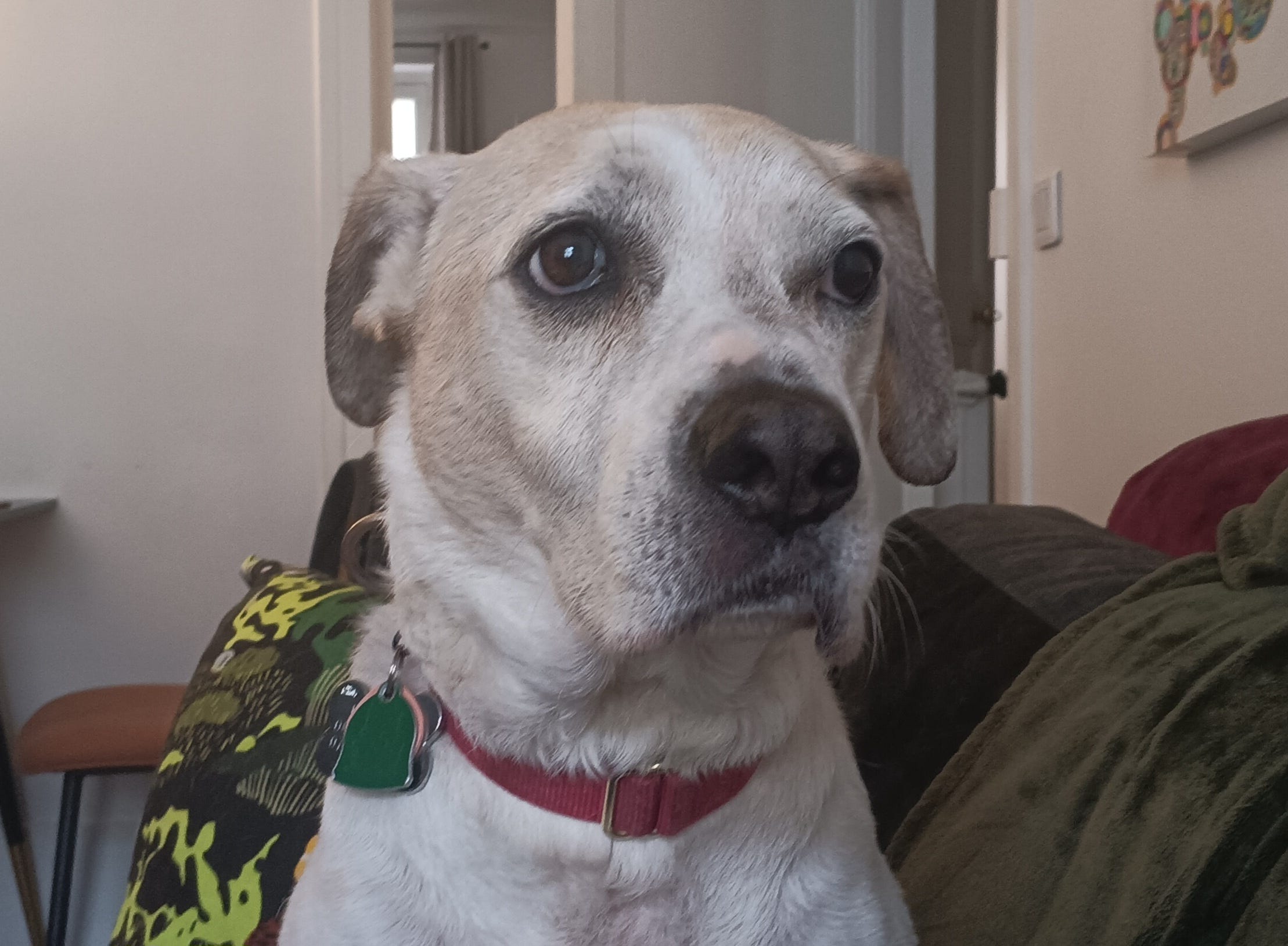
The conference was in Potsdam. Having just written a book that had quite a lot to say about the Potsdam Conference, I thought it would be neat to see the castle that hosted the it, but it was not to be. It has apparently been closed for renovations since 2020, and will remain closed untol 2029. A German that I mentioned this exceptionally long renovation time to seemed to think it was par for the course here.
While I in flight to Berlin on Wednesday night I had the unfortunate realization that my hotel reservation in Potsdam did not begin until Thursday. How hard could it be to find a hotel (or even hostel) room in Berlin or Potsdam at 9pm on a Wednesday? Answer: impossible. Apparently everything was truly booked up, unless I wanted to spend €1000 or more. Which I did not.
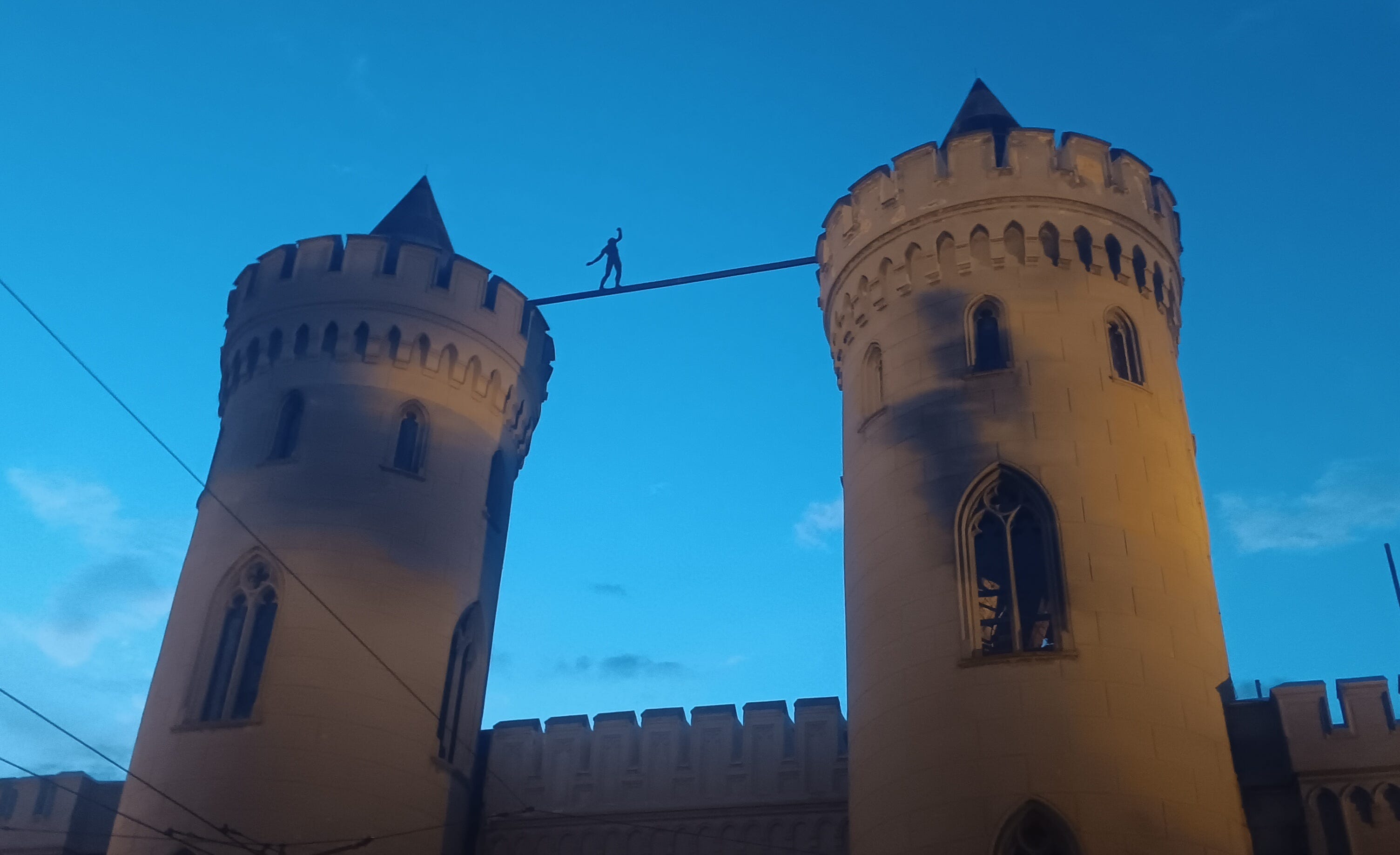
I remembered that I did know a few people who lived in Berlin and fortunately (in between frantically Googling things like “can you sleep in the Berlin airport overnight?”) I ended up with two offers for help. I ended up in a very nice guest room in the Berlin apartment of an old friend from graduate school, which was much preferable to trying to rough it in the airport.
The next morning I took the train from Berlin to Potsdam, which was easy; it is about 30 minutes away. One does pass through Wannsee on the way there, which brought to mind yet another wartime conference.
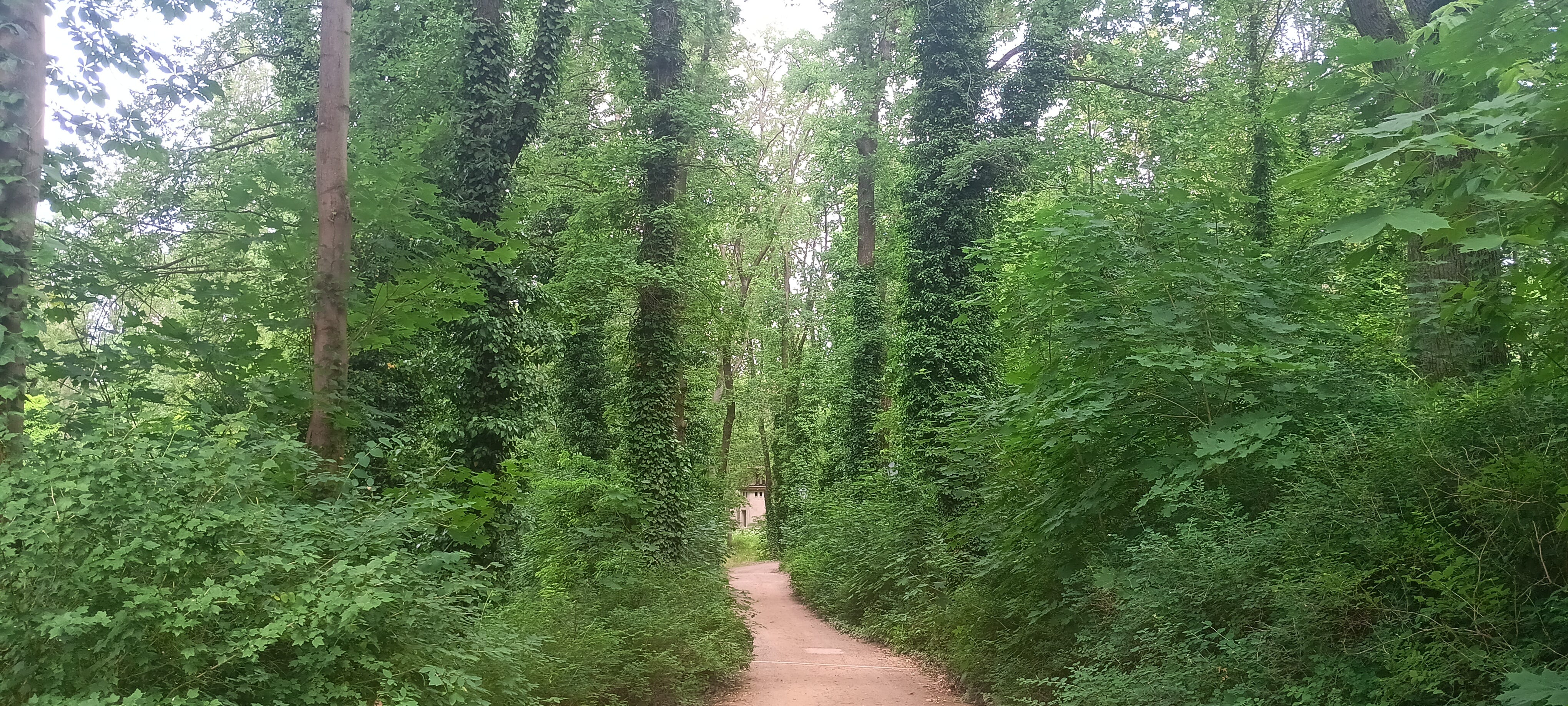
The conference was held at a facility that was part of Albert Einstein Park, which houses a number of separate research institutes. As the photo above indicates, one has the feeling that the whole place is basically a forest, with little winding paths connecting various parts of it. A very odd (but pretty) place.
I'll talk about what my contribution to the conference was below. I was there for basically all of the sessions, which were on quite a lot of topics. Among the ones that captured my attention was one about how the CEOs of the various AI companies invoke the idea of apocalypses in justifying their work, and I am going to try and interview the authors of it for the blog at some point in the near future, because it provoked a lot of interestijg comparisons for me with the apocalyptic rhetoric common in nuclear history.
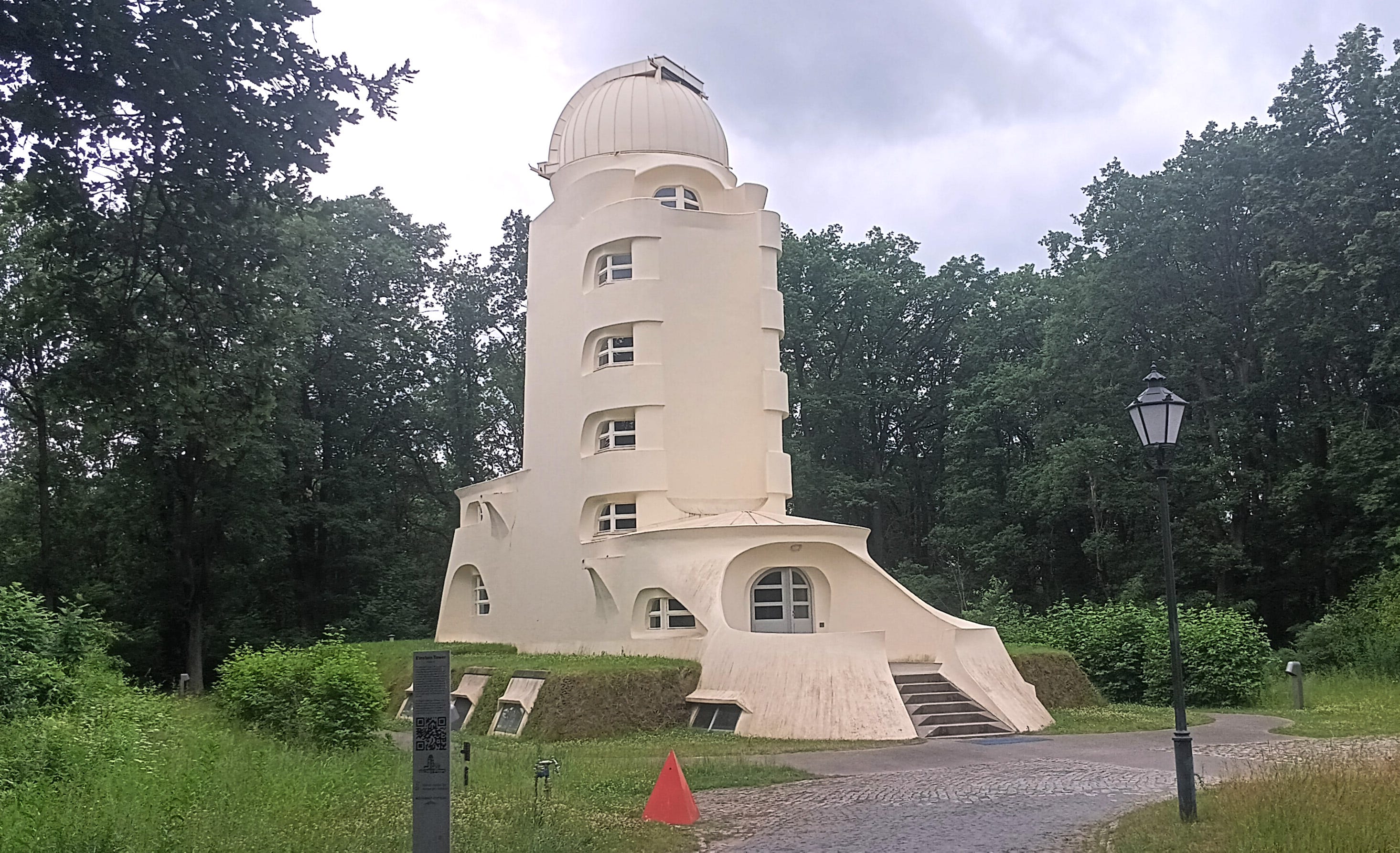
I didn't realize until I got there that the Science Park housed the Einstein Tower (above), which I was very aware of from my time as a TA for a class on the “Einsteinian Revolution” in graduate school. It was a little smaller than I imagined, but maybe it was just colder than usual (cue rimshot).
After the conference ended, I took the train back to Berlin, and had some time to just walk around and explore a bit. I saw a remnant of the Berlin Wall, the Reichstag, Check Point Charlie, Brandenberg Gate, and a few other “classic” sites because, well, one has to. The weather alternated between warm sunshine and pouring rain, which felt appropriate somehow.
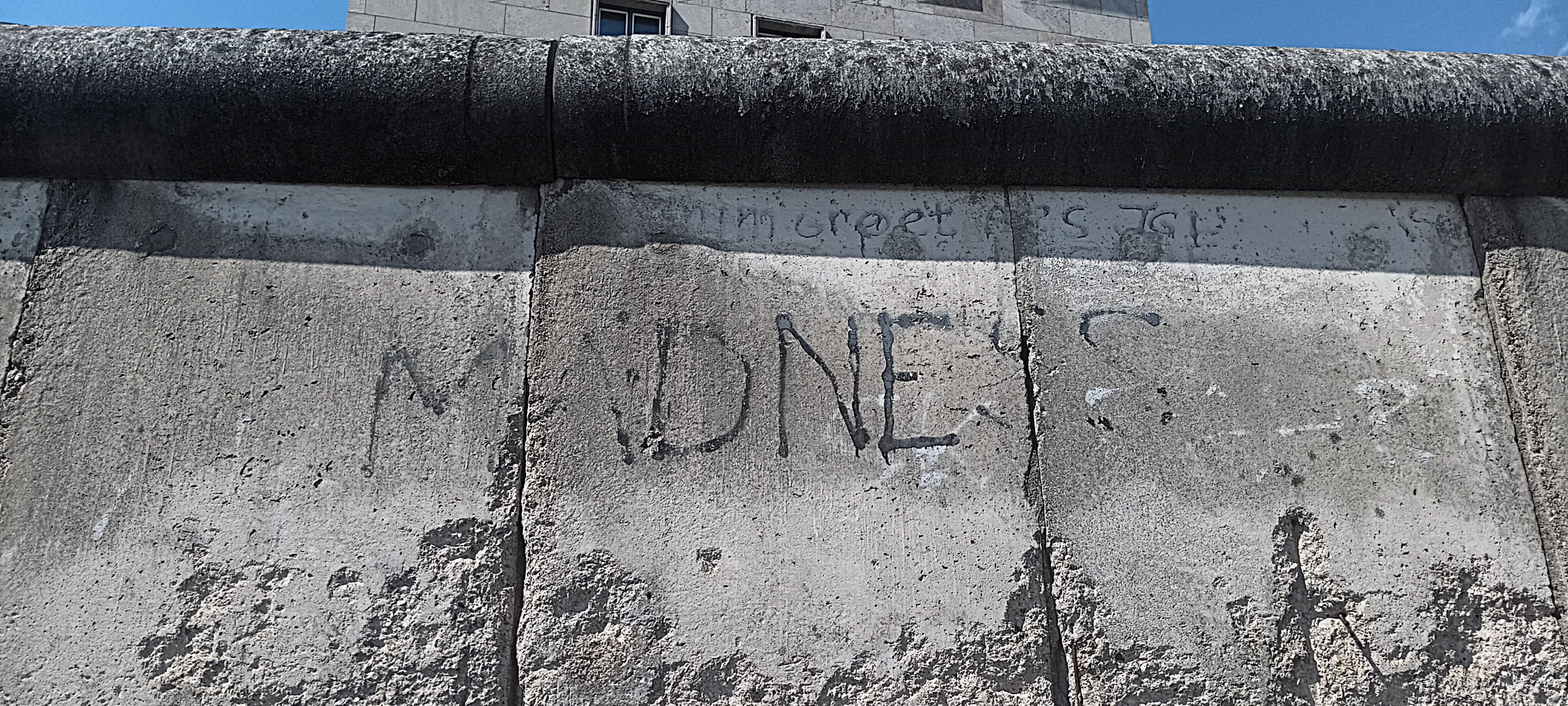
I also then just walked around a few of the neighborhoods. I did not have enough time to really feel that I can generalize much about Berlin, which is a large city. I was impressed by how much of the city is covered in graffiti. It seem more prevalent there than even in New York (and much more than Paris, obviously).
The “vibe” of Berlin seems much more intentionally gritty than Paris (acknowledging that there are grittier parts of Paris and less gritty parts of Berlin) and one get the feeling that the scars of division and reunification, while perhaps healed, are scars nonetheless. And perhaps not all that faded.
It is an interesting place, though. I can see why it has a strong appeal for many — it has a particular urban funkiness to it, what Brooklyn today wishes it could be, I think. But I am neither an expert on Brooklyn nor Berlin, so these are just superficial impressions…
For Doomsday Machines this week, I wrote about a document that I have known about for a long time: an economist's analysis of the economic effects of a large nuclear detonation over the city of Houston from 1965.

I find it a very strange and fascinating read, some parts horrifying (in more ways than one) and other parts almost humorous. There are some nuggets of insight, though, and I find aspects of the analysis (like making the demographic effects of nuclear war more tangible) to be surprisingly consonant with some of my own interests. I would love for NUKEMAP to be able to give insights into the detailed demographics of the dead and the survivors of a nuclear detonation… who knows?
Keep reading with a 7-day free trial
Subscribe to Doomsday Machines to keep reading this post and get 7 days of free access to the full post archives.