
Wasteland wrap-up #89
The August emptiness, bike sharing around Paris, another Hiroshima anniversary, time under Trump, AI and education, a new adaptation of L'Étranger, a fire lookout walking simulator...

I am approaching my first anniversary on arriving to Paris. I am reminded of how quiet the city was, as August is the month in which a huge number of Parisians take their vacations. It is not uncommon to see stores and restaurants closed with hand-written signs that instruct you to come back in a few weeks, when their owners and employees are back from wherever it is they go.
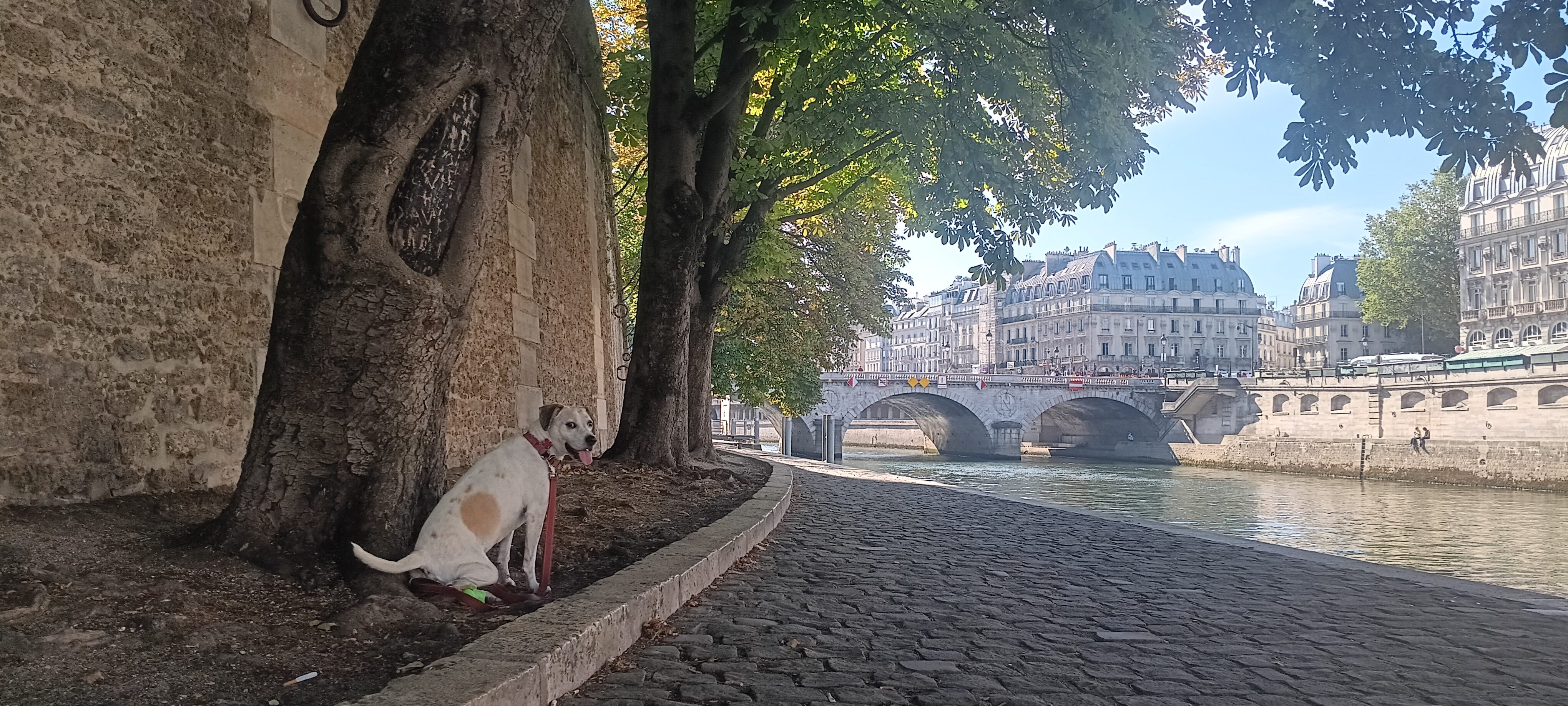
The decrease in people is quite perceptible. There are still tourists in the tourist areas, of course. But the rest of the city has a sort of ghost-town like vibe in it that is hard to pin down — it’s not truly empty, there are still plenty of people walking and driving and biking around, but it certainly does not feel like it is at its usual capacity. Which gives it a sort of wistful, magical quality that I very much enjoy.
A few weeks ago I (finally) got my act together to figure out how the bike share systems work in Paris, and did a few bike trips around town. These were very “functional” trips, with the motivation being in part to get around the fact that one of the main metro lines I used was closed for a few weeks for maintenance. So less about having a joyride and more about getting from point A to point B.
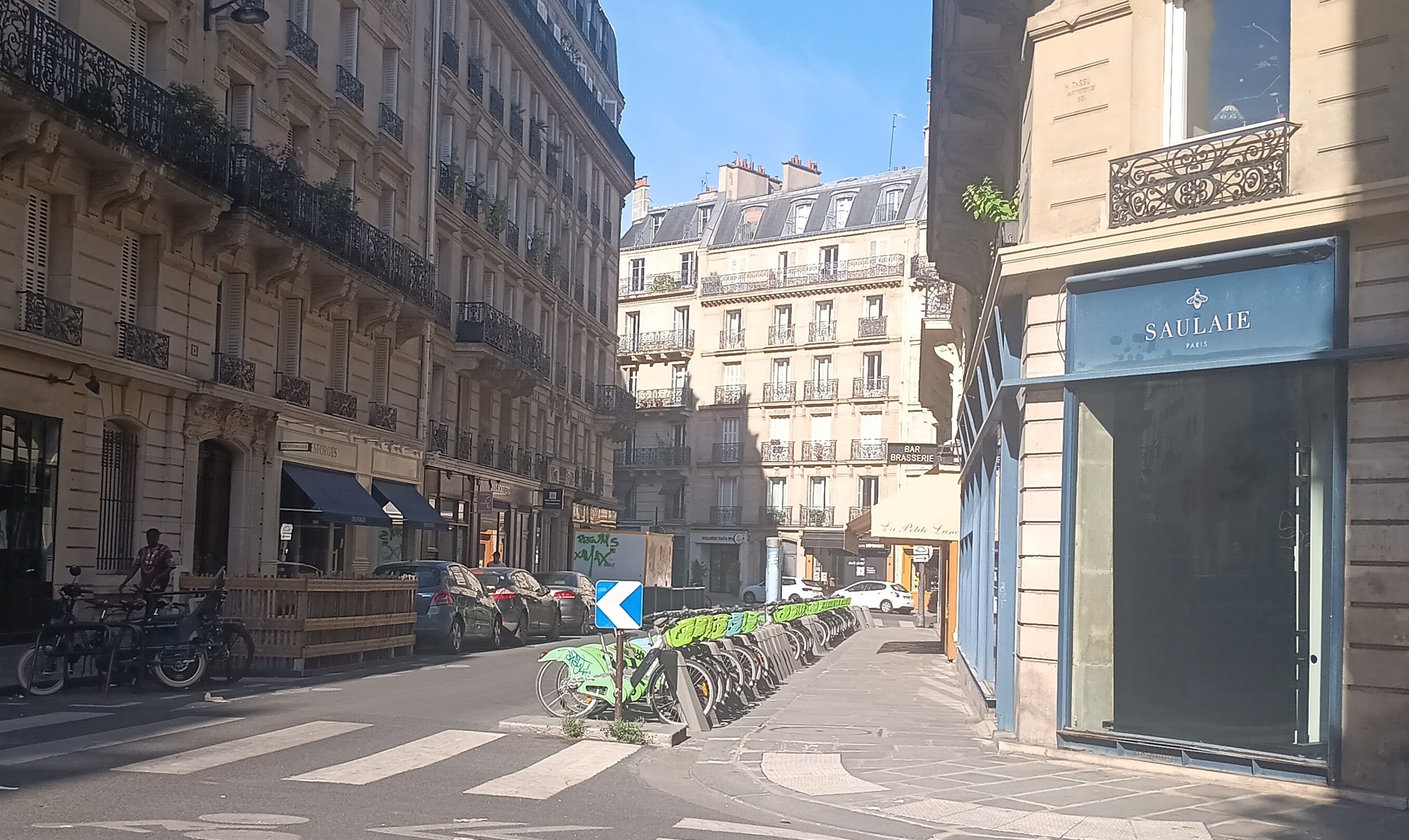
There are several different bike share systems here, each with their own pricing schemes and technological dimensions. The one I have tried is called Vélib’ Métropole, and appears to be the largest in the city. It uses a docking system similar to the Citi Bikes I used in NYC/NJ and the Capital Bikeshare program in DC (as opposed to the Lime bikes, which you can leave anywhere, for better and ill). The bikes and their stations are quite well-saturated in the core of Paris, including one large set of docks within steps of my front door, which is why I went with it.
I used the electric “assist” Vélib’ bikes, which are a little more expensive than the unassisted ones, but I really enjoyed the assisted bikes in NYC, which make you feel like a champion bicyclist. The Vélib’ electric bikes do not make you feel like that. They make you feel like you are on a normal bicycle, as opposed to an extremely heavy and rugged bike share bicycle. That is still a significant improvement — I find the unassisted bicycles to be a lot of work, like trying to ride a tank — but it is a lot less “speedy” than the electric Citi Bikes. Which maybe is a good thing, I don’t know. The Citi Bikes really allowed one a sense of speed and mastery that is, perhaps, misleading. The Vélib’ electric bikes, while not nearly as fun and easy, still feel like real bicycles.
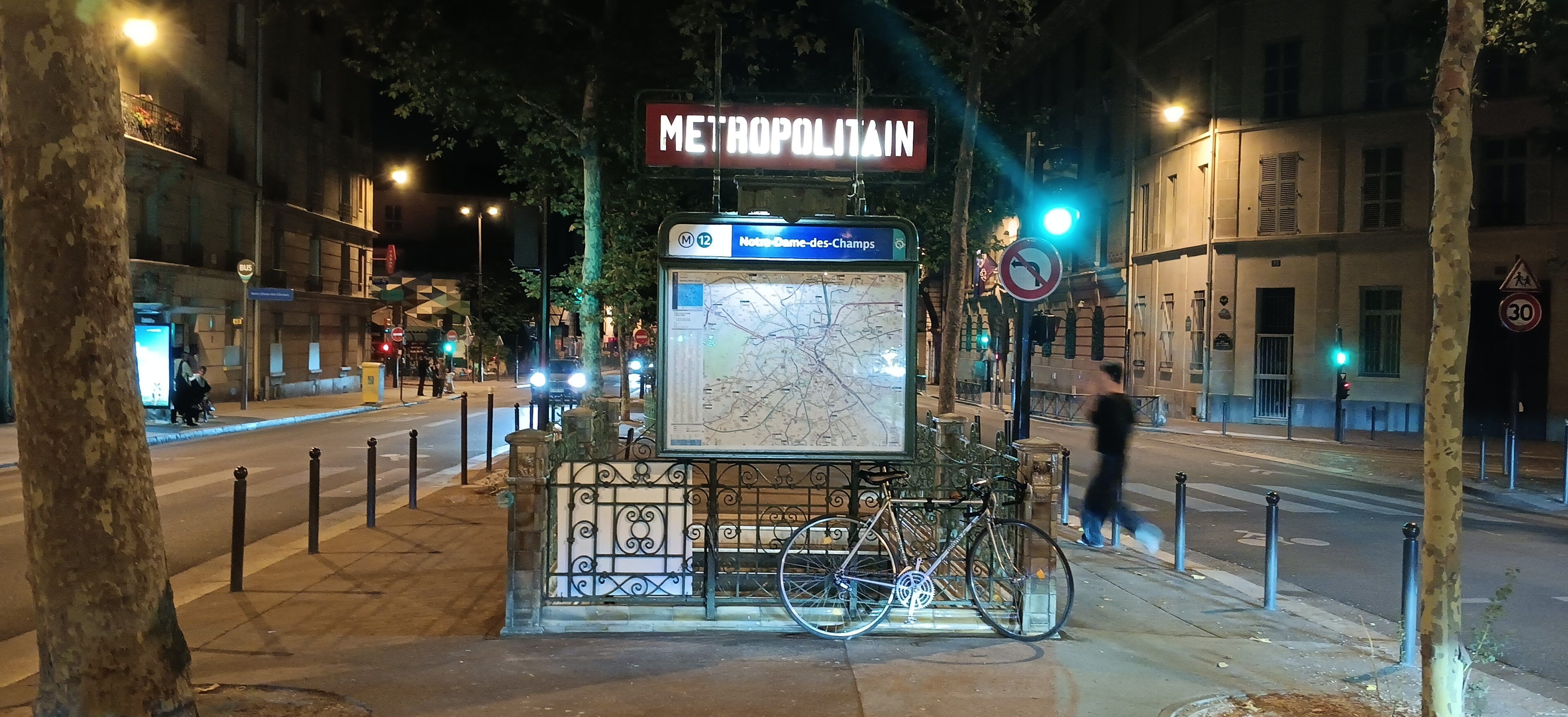
(And, before you ask, yes, I always wear a helmet. I bought an Overade Plixi foldable helmet several years back, which I like much more than standard foam helmets, and brought it with me to France. It can be folded up into about 1/3rd the normal volume of a helmet and fits into a little bag that comes with it. This makes it much easier to deal with after one has arrived at one’s destination than a full-sized helmet. I also like to believe it looks less dorky than standard helmets. Which really shouldn’t come into it — nobody is going to mistake me for looking cool on my electric bike share bike, and looking cool isn’t really worth brain damage anyway — but it does help encourage me to wear it.)
As evidenced by the fact that I prefer electric bike share bicycles, I am very much not a serious cyclist. I am happy to forego performance in exchange for a lack of responsibility for maintenance, and am mostly using the bikes just to go distances that would be inconvenient to walk and as an alternative to taking the subway or a bus. So how does Paris compare, on those terms, to either DC or NYC/NJ, the two other cities I have the most experienced with this kind of cycling?
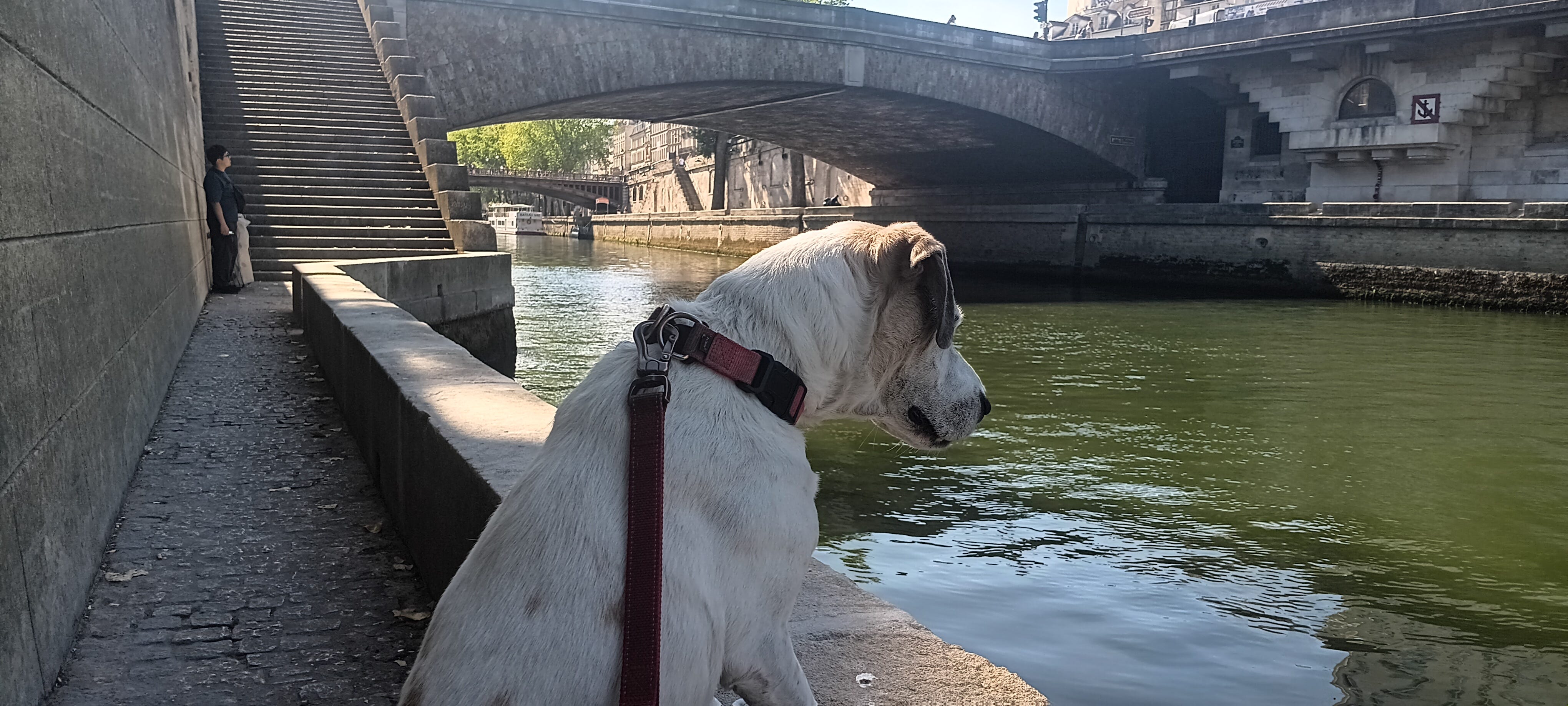
In terms of bike infrastructure, Paris is better than NYC and northern New Jersey by a considerable margin. On large roads, there are frequently dedicated bicycle lanes that are physically separated from traffic, and cannot be used as places for cars to idle or double-park. This is a major issue in NYC/NJ, where bicycle lanes are often treated as “free parking,” with apparently little enforcement. Bicyclists are also given more “rights” in Paris — on many one-way streets, it is explicitly indicated that bicyclists are allowed to travel in either direction. Whether one feels secure in doing that is another issue (and as a pedestrian, it means you have to always look both ways before crossing a one-way street), but at least one doesn’t feel like a criminal if one does that, which is important in a city with lots of small one-way streets.
There are also many areas where bicyclists are explicitly indicated as being allowed to take up the entire car lane, and are allowed to use dedicated bus and taxi lanes, which themselves are physically separated (with concrete barriers) from other car traffic. All of which is good for reducing the cases in which cars and bicycles are competing for the same space. In this sense, it is more similar to DC than NYC, although my memory (perhaps out of date) is that DC has more dedicated bicycle “corridors” than does Paris.

Parisian traffic, while not exactly “calm,” is not nearly as intense and constant as the NYC area. Or the DC area, if I recall correctly. There are lots of anti-car measures in place which try to reduce the appeal and the number of cars, and they largely seem to have worked (to the detriment of car owners, of course). All of which is to say that it doesn’t feel like biking in either of those cities, where other cars are a constant menace (esp. in NYC).
The downside of this, though, is that the bike infrastructure in Paris is basically attached to the car infrastructure, and so some of the same things that make driving a car in Paris presumably frustrating also apply to cyclists. One is constantly stopping at red lights — I only had one instance in which I had a “green run” that lasted a couple of blocks. (There are no stop signs in Paris. They just don’t have them. Just stop lights. And they have a lot of stop lights.) And so what feels like it should be a very quick trip always takes a bit longer than one expects because one is stopping constantly.
Which feels like a mixed bag — it definitely reduces the sense of menace, but it also means that it’s not all that fun or that fast. Stopping every single block is a drag. I’m not confident enough with my understanding of Parisian driving to run a red, although plenty of other cyclists do it. A compromise is to avoid the large streets and instead take the smaller back streets, which either lack lights or have lights that one feels more confident ignoring if there is truly no one else around (which is often the case).
Anyway, like so many things, it is not terrible, not perfect. I found the bikes reasonably easy to use. The Vélib’ bikes felt like they were in need of refurbishment, and the associated app is kind of terrible, though, and its ability to give information about station locations seems pretty spotty, which did delay me in at least one instance (I knew more or less where my destination station was, but not exactly, and the app was very buggy in giving me the information — the station was hidden behind some trees and not obvious from the main street I was on). But overall it was not a profoundly unpleasant experience, just one that felt like it was in need of some refining. So in the future I may give one of the other systems a try, just to see how they compare, and if they help out with these rough edges.
I’ve been doing a lot of writing and work the last week, catching up on projects and deadlines and things like that. I managed two Doomsday Machines posts this past week, one that was very brief, and one that was more significant.
The brief one is about the famous “human shadows” at Hiroshima, which I was spurred to quickly write by being alerted to the fact that there was a tie-in with a date given in Ray Bradbury’s 1950 short story, “There Will Come Soft Rains”:

My longer post was an article I wrote for The Bulletin of the Atomic Scientists for the anniversary of the atomic bombing of Hiroshima, about the scarred “Hiroshima Maidens”:

The story of the “Hiroshima Maidens” has been told by others — who I credit in the footnotes, and am very grateful for — but I tried to give it a slightly different gloss. As I discuss at the end of the article, there are basically two “modes” in which this story is discussed, the celebratory and the cynical. I found myself coming down somewhere in between the two, ultimately.
Keep reading with a 7-day free trial
Subscribe to Doomsday Machines to keep reading this post and get 7 days of free access to the full post archives.