
Cutting the head off the Soviet chicken
"By Dawn's Early Light" (1990): a contrived, late-Cold War, made-for-TV nuclear thriller

Nuclear thrillers are always an expression of an anxiety: as long as these weapons exist, there is always a possibility they might become used. Even the most elegant theories of deterrence rely on a world full of rational, self-interested actors whose understanding of the world situation is adequate enough to allow them to chart a path through troubled times. But what if that isn’t the world we’re living in?
There are many variations of this conundrum that have been explored in well-known and often well-loved films. Some of these films have themselves come to embody these problems expertly: Dr. Strangelove (1964) evokes the mad generals and the Doomsday Machine; WarGames (1983) raises the problems of automation, cyberattacks, and artificial intelligence; it is too soon to know if House of Dynamite (2025) will have such a cultural relevance, but if it does, perhaps it will be about the problems of attribution, confusion, and the short time-scales for nuclear decision-making.
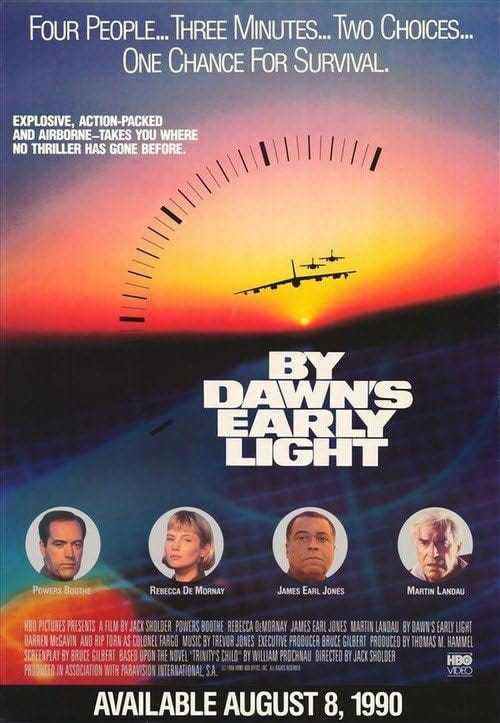
By Dawn’s Early Light (1990) is not a well-known or well-loved film. It was an HBO “original movie” — read: made-for-television film, before HBO got good at such things — about the conduct of nuclear war. In almost every respect it is a very Cold War film, having been adapted from William Prochnau’s Trinity’s Child (1983), with a little bit of Glastnost window-dressing adding to keep it slightly topical.
I recently tried to explain the plot to someone briefly, and he seemed outright skeptical that I was relating it correctly, as it is a bit over the top. The basics are thus: the US detects a nuclear missile launch from Turkey to the Soviet Union which it has not ordered. The Soviets launch a number of their own missiles in retaliation at the USA. The Soviet president tells the American president that they determined, belatedly, that the Turkish missiles were launched by anti-Soviet separatists, but that automated Soviet defensive systems assumed they were in a war with the United States. The President is encouraged to stand down, but the Soviets will also agree to accepting a retaliation in kind, and end the conflict thence. Should the United States engage a larger counterattack, then the Soviet Union will escalate as well.
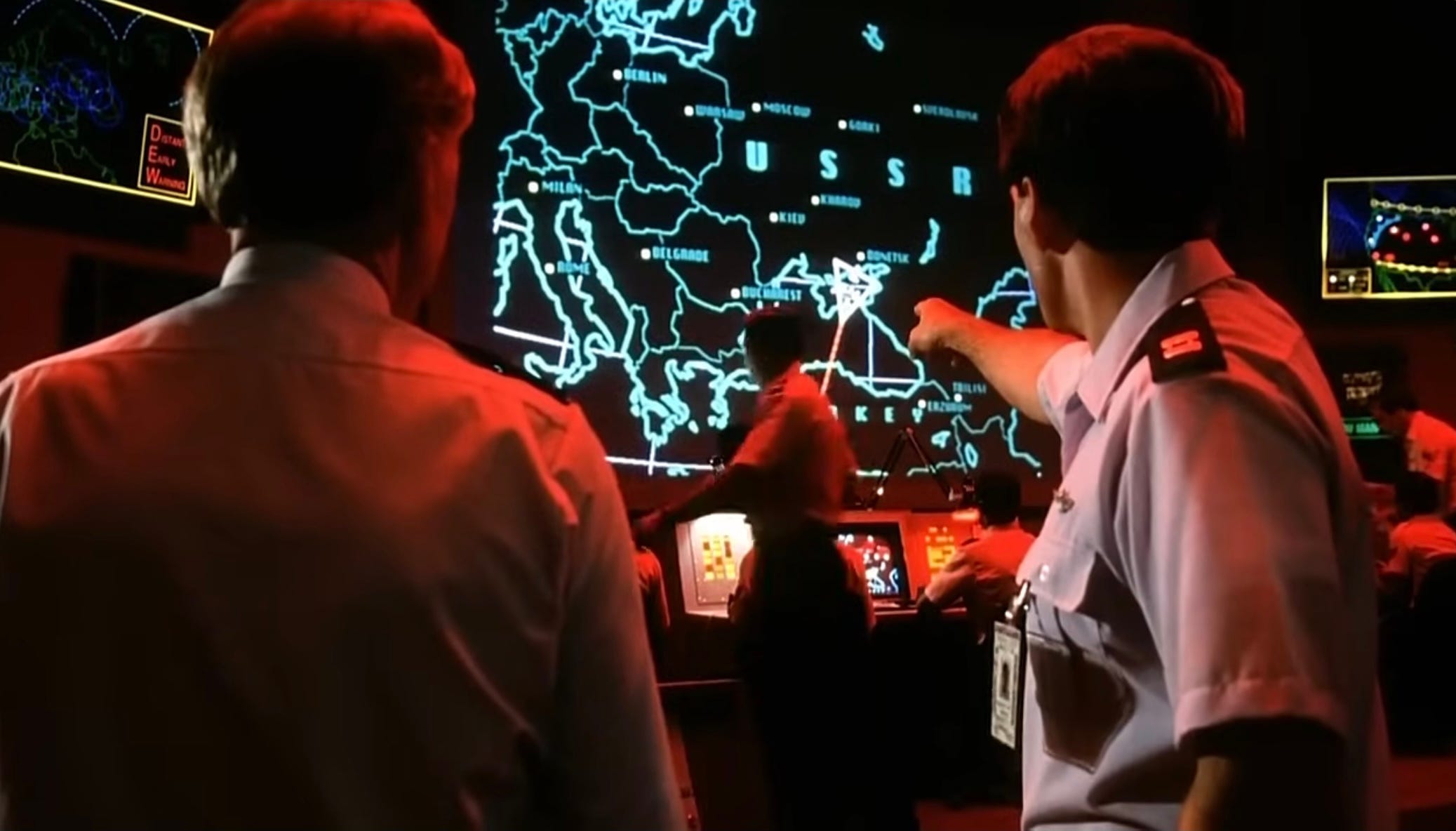
Thus far, this is something of a reverse Fail-Safe (1964) situation, which is not a terrible concept. Things start to go off the rails soon after. The President (played by Martin Landau) is apparently incapable of basic self-preservation and allows himself to get both partially nuked at the White House and later apparently dies when his helicopter encounters another Soviet nuclear detonation.
This causes a search for the next legal successor, who is an utterly unqualified Secretary of the Interior, who is given the code-name “Condor.” Having assumed the President’s duties onboard TACAMO — a presidential airplane equipped for nuclear war fighting — Condor quickly shows himself to be obsessed with “winning” the nuclear war and with little interest in deescalation.
A belligerent Colonel Fargo (Rip Torne), who is clearly regarded as an extremist by his military contemporaries, feeds Condor’s paranoia and desire for ultimate justice, encouraging him to issue a strike on Soviet command and control. The head of the Strategic Air Command, code-named “Alice” (James Earl Jones), himself on board Looking Glass (another command and control airplane), believes this is madness, but passes on the orders anyway.
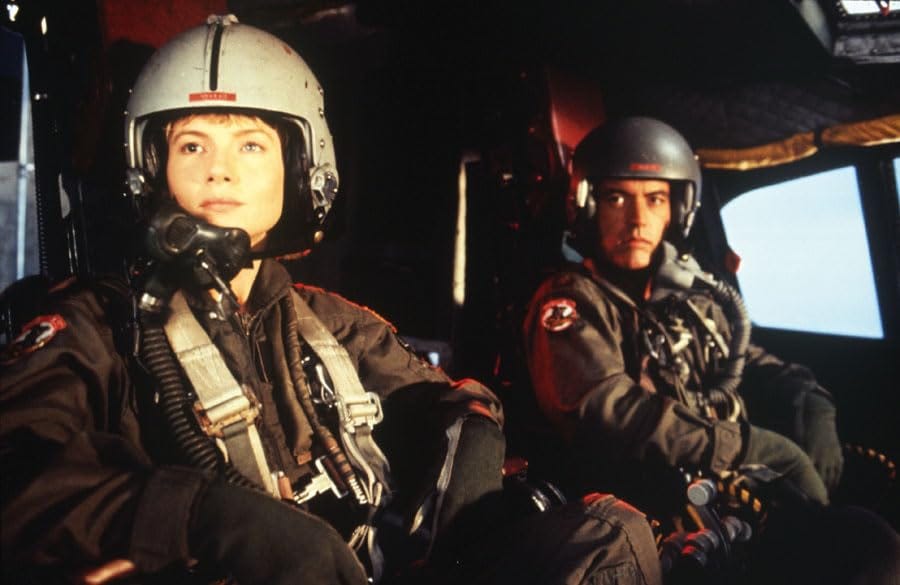
A large part of the film is focused on the crew of a particular B-52 bomber, code named Polar Bear 1, that is scrambled in the early part of the crisis. Its crew are surprisingly dysfunctional, apparently having not prepared much for the job of thermonuclear war, or unable to deal with the stress of it. The pilot (Powers Boothe) and his co-pilot (Rebecca De Mornay) are engaged in an illicit sexual relationship (“fraternization”).
Over the course of their part of the film, they are attacked by Soviet MiGs (which they defeat and evade) and penetrate Soviet airspace. They are given the orders to conduct the strike on Soviet command and control. The co-pilot refuses to carry them out, claiming that they are madness — if you kill their leaders, who will be able to stop the war? The pilot demands compliance, to the point of offering the co-pilot a cyanide tablet, but ultimately backs down and agrees to turn the bomber back.
This, in turn, leads to one of the crew members who had previously exhibited some mental instability to attempt to take over the plane (calling them cowards), a situation that resolves itself when he uses an ejector-seat to (presumably) commit suicide, which ejects the other crew as well. And thus the pilot and co-pilot find themselves the only people on the plane.
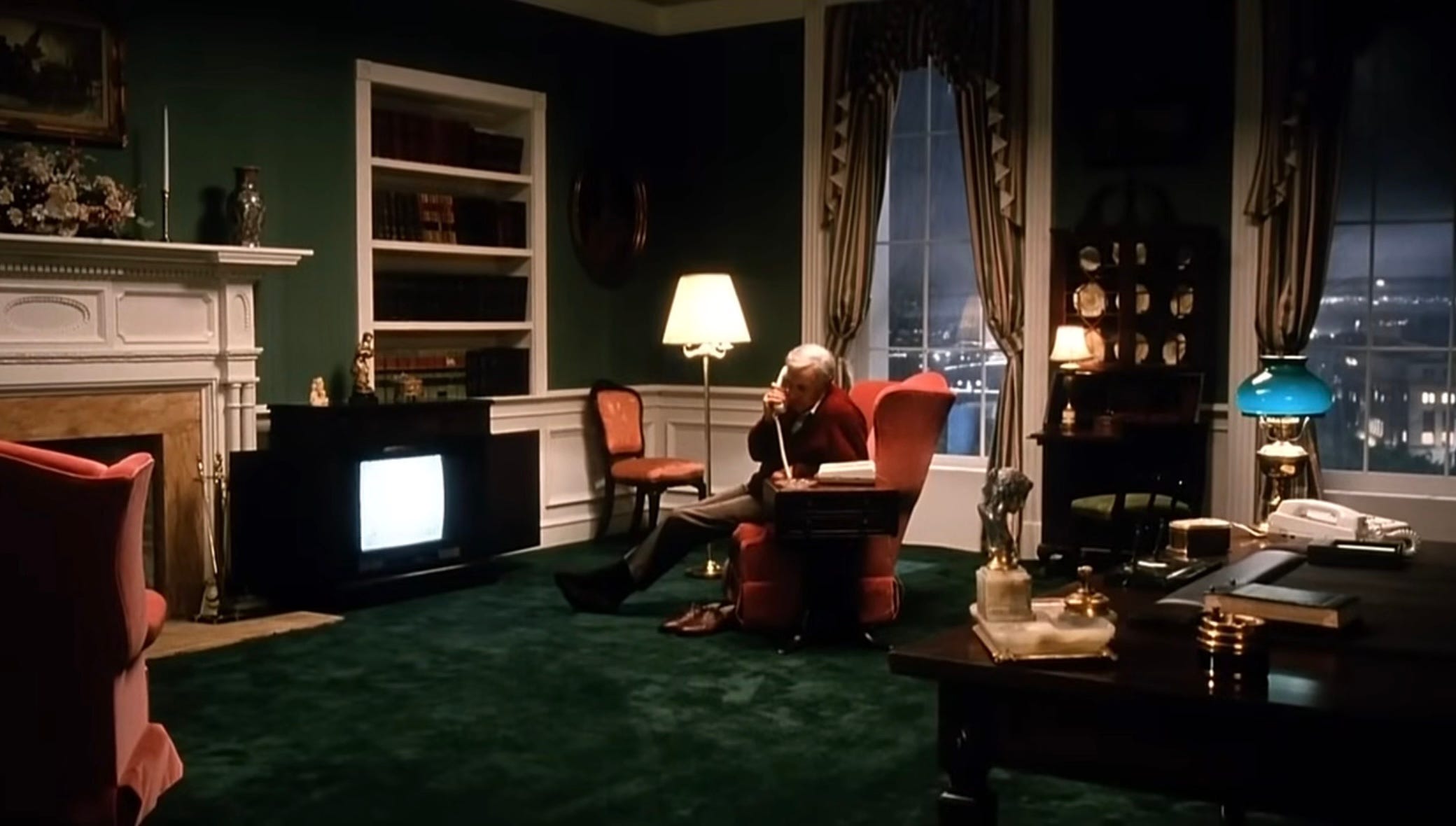
Meanwhile, it turns out that the original President has not died, but was just injured, and was taken to a FEMA bunker. He regains consciousness (but has lost his eyesight), and attempts to wrestle back control of the situation. Having seen Polar Bear 1 turn back, the Soviets turned back some of their own bombers as well, as a sign of mutual desire for deescalation. In several hours, however, US submarines will surface to receive their own launch orders, which the Secretary of the Interior has given.
The President contacts the Secretary of the Interior, but cannot convince him to relinquish control — because the Secretary of the Interior doesn’t want to, we understand — and as the President’s copy of the authentication codes was lost in the attack that took his eyesight he cannot simply override him. Ultimately. the President contrives a way to issue his own orders to the submarines, but if the submarines receive two sets of contradictory orders, they will default to orders for war. Still with me?
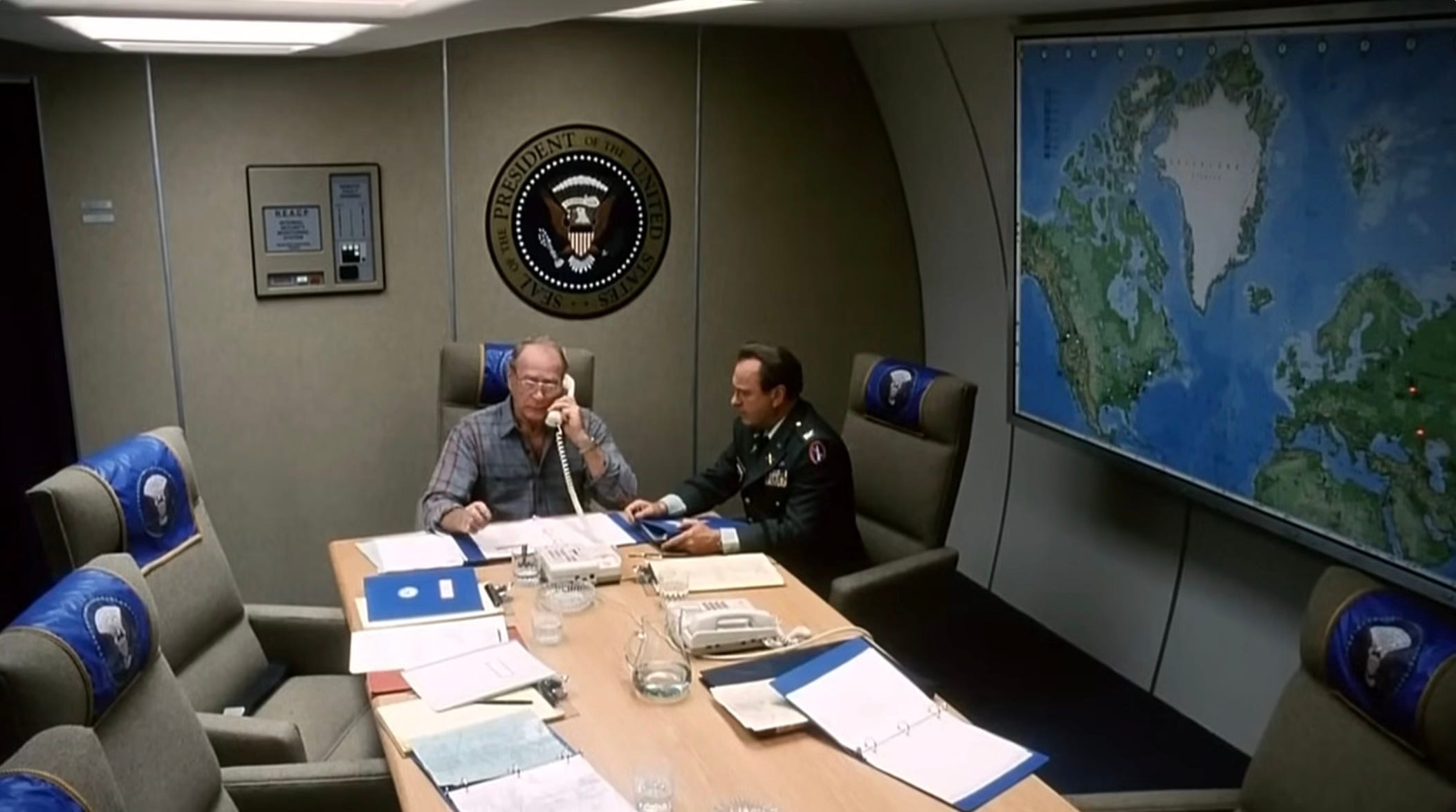
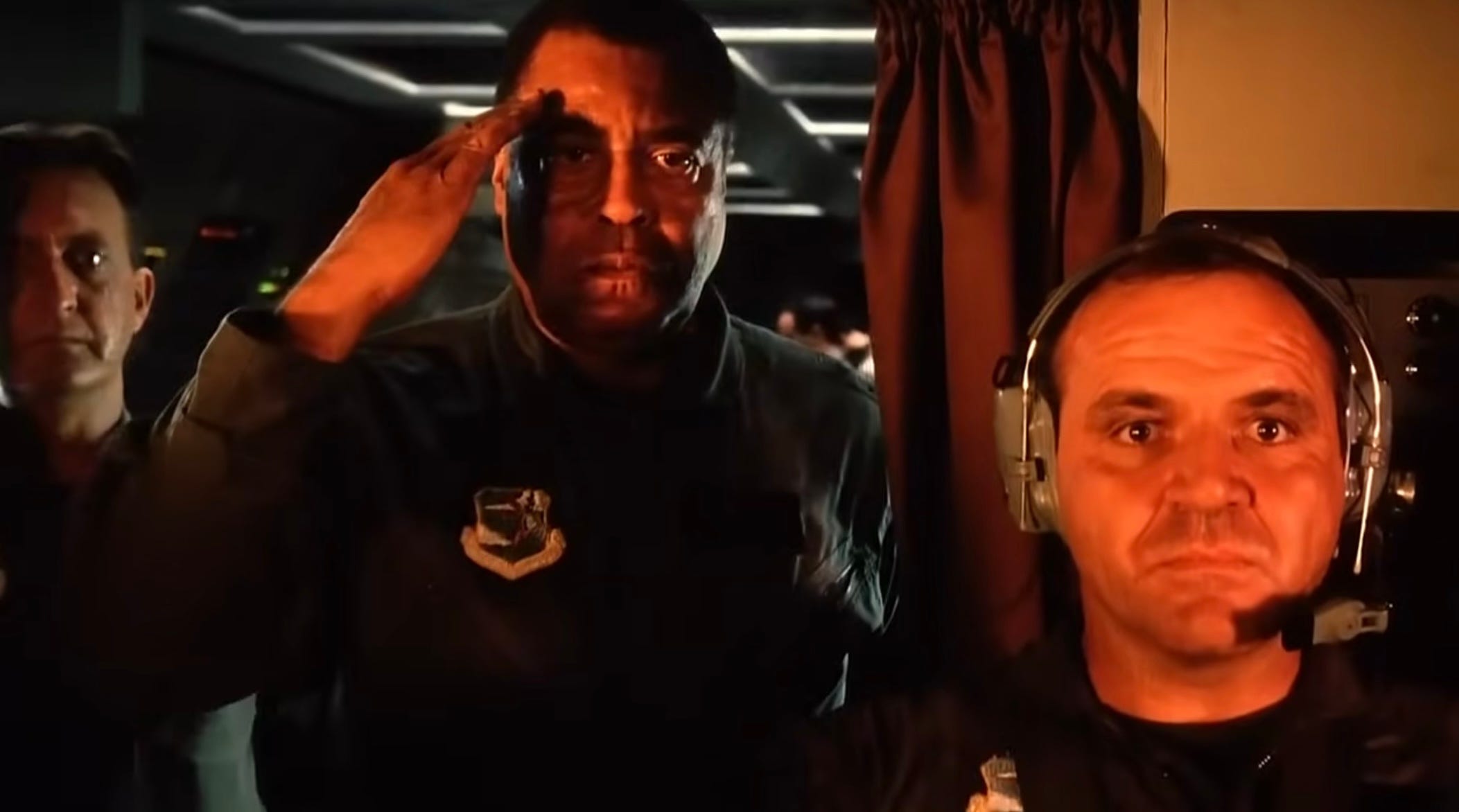
To resolve this, the SAC commander, “Alice,” agrees to ram Looking Glass into TACAMO. This, however, appears to be impossible, as the Secretary of the Interior’s aircraft is too far away for Looking Glass to catch up to it before the final deadline, but the pilot on TACAMO aircraft realizes what is happening and turns his plane so that Looking Glass can collide with it, giving a final salute to “Alice.”
Having destroyed the Secretary of the Interior, the President’s orders to cease hostilities (apparently, somehow) go into effect.
Meanwhile, Polar Bear 1 was confronted by US forces who had been ordered (by the Secretary of the Interior) to shoot it out of the sky, but circumstances conspire to spare them. They fly eastward into the sunrise.
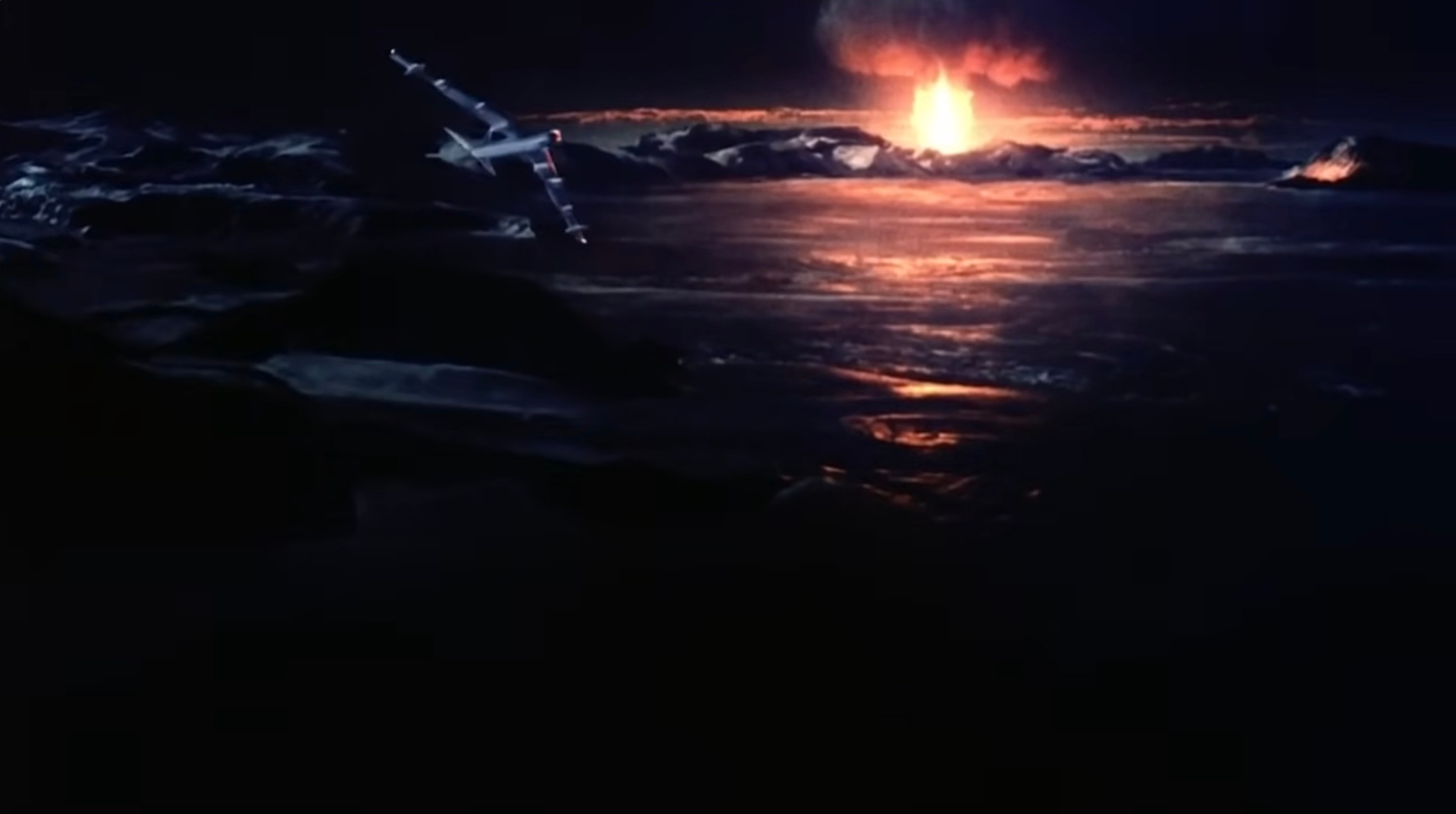
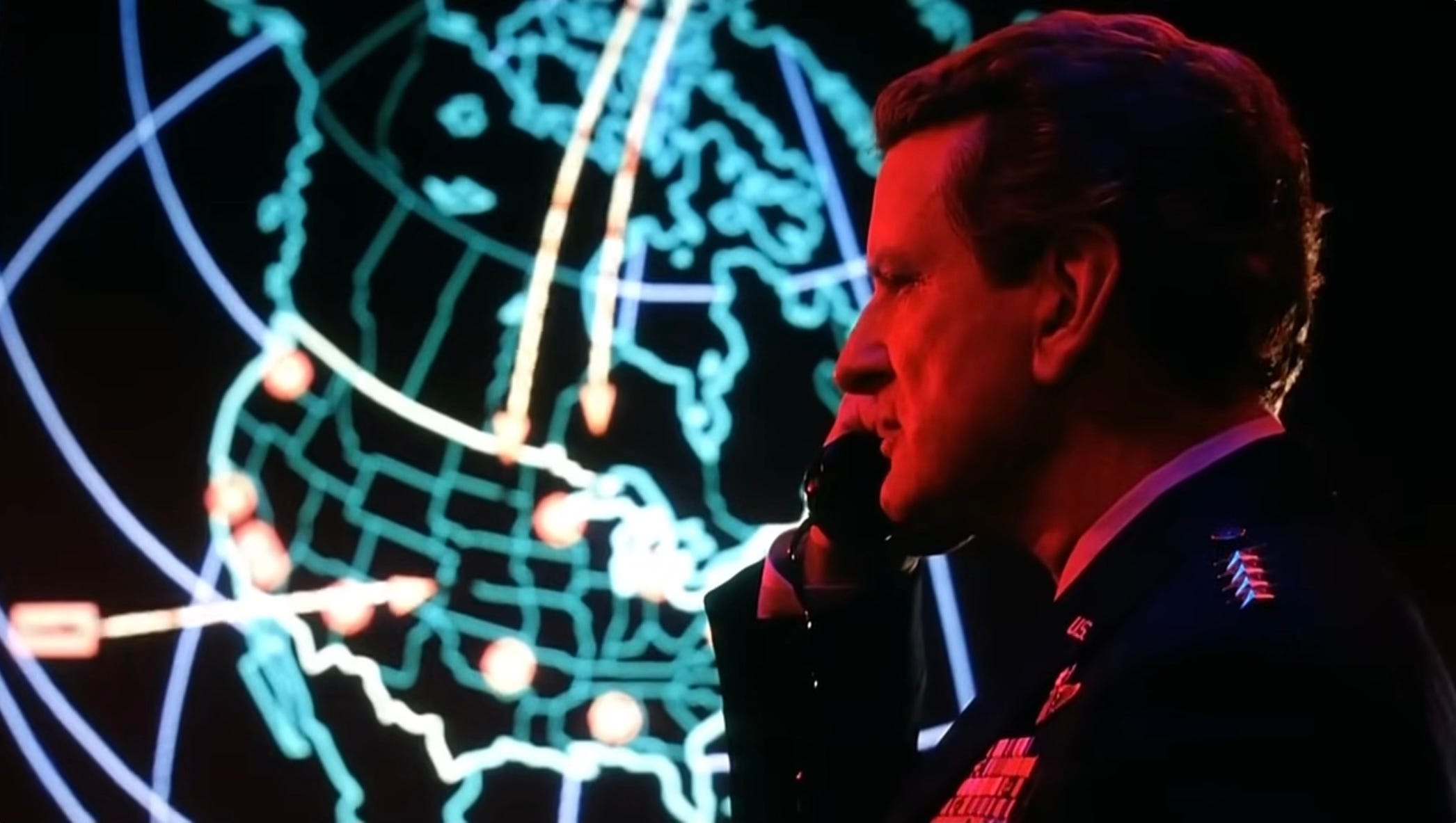
As a film, this is not that great. It probably works better as a mass-market paperback of the Tom Clancy variety; it certainly has that feel to it, and, at least according to Wikipedia, it is a relatively faithful adaptation. The acting is adequate. The overall feel is fairly cheap: most of the action takes place in a few cramped rooms (a very limited number of sets), with the action shots being obviously model planes or limited to computer screen readouts that are narrated by the characters. There is one nuclear mushroom cloud, but it is clearly a matte painting with a model plane in front of it. It definitely feels like a made-for-TV movie of this era.
The question to ask, I think, is not “is this a good film” — no, not really — but rather, what are the anxieties that this particular take on nuclear war represent? And in this department, if you get away from the rather silly aspects (planes ramming other planes, etc.), it does end up probing some interesting issues.
The first and most obvious one is the initiating attack: a separatist group (non-state actor) somehow hijacking an existing nuclear weapon and using it to provoke a nuclear war between major powers. Similar plots exist, although I primarily associate these with the post-Cold War (e.g., Clancy’s Sum of All Fears, 1991). So neither the 1983 source material nor the 1990 HBO adaptation are really behind the times on that one. This particular plot combines the non-state-actor provocation with an attribution problem and an automated defense system, so that is wrapping up a few anxieties into one package.
But that isn’t really what the film is about; that is just what kicks it off, and it doesn’t get talked about much after it happens. What the film is really about is the psychological state of people involved with nuclear weapons choices. I appreciate that it focused on both a “high” and “low” aspect of this question. The “high” involves the people at the very top of the chain of the command, like the President, the Secretary of the Interior, the top generals and colonels. The “low” are the people in charge of actually dropping the bombs, the B-52 crew.
On the “high” end of the chain of command, the problem one of appropriate judgment (prudence), madness, and the problem of succession during time of war. A Secretary of the Interior is not chosen for that role on the basis of their ability to conduct a nuclear crisis, even though they are indeed eighth in the line of succession. It is bad enough, perhaps, that a single person — the President — has this responsibility (for any President, really), but to then contemplate how eighteen other people might handle suddenly being put into that situation is, well, rather heavy.
In the case of the film, jostling for authority among the high end of the chain of command provides much of the film’s dramatic material. And who is to say how anyone would react to such a situation? In the film, many millions of Americans have already been killed by the war in practically an instant — how would any of us react to that, given these terrible options?
On the “low” end of the chain of command, the problem is multiple. How will a bomber crew react to learning that its home base has been eliminated, and any family it had behind are likely dead? Will they continue to function as a cohesive unit? How will they react to opening up their orders and finding them to be something they judge as madness? And how will the personal relationships between these crewmembers affect these discussions, if they happen at all?
Wikipedia says that in the original book, the pilot and co-pilot, though of mixed sex, are not in a relationship, and that this was an alteration made for the film. It is an interesting choice, as it evokes another common anxiety about how men and women would interact in military situations generally. In this case, it is the female co-pilot who refuses to go through with the orders that she believes will lead to madness, and the male pilot who initially insists upon following them, but relents when faced with the possibility of his lover’s individual death. These are, of course, pretty stock gender roles, but the question they are trying to get at — that individual relations and states of mind may play a role in how these sorts of things work in practice — are interesting ones.
Ultimately, the plot feels too contrived, and the bomber drama feels, well, unrealistic. The bomber crew in particular do not feel much like actual military personnel to me: they seem barely prepared, at least mentally, for their mission, and I just do not find it very believable that they would refuse to follow out these kinds of orders. Millions of Americans have died by this point; they know this. As far as they know, the escalation has already occurred. At that point, even one of their own crewmembers has died from the fighting. What are the odds that they are going to get moralizing? Much less turn back? What are they even turning back to? Even they do not know.
Still, the value of centering that part of the “action” around a bomber crew is that they do have some time to deliberate, their actions are not wholly automatic, and they could, in principle, rebel. It’s much harder to imagine ICBM launch commanders doing that sort of thing. There is a decent exchange to this point between the pilot and the copilot: “You would have turned a Minuteman key without thinking!” “They gave me time to think.”
Could one imagine some kind of struggle for authority playing out at the higher levels, in the event of a contested succession? Could we imagine someone utterly unqualified for the job aligning him or herself with escalatory elements, and ignoring the suggestions from other military officers? Could we imagine those senior generals following such orders anyway? These are trickier questions, and perhaps the more interesting ones, ultimately. They are rendered a little ridiculous in the film by making both “Condor” and Fargo so over-the-top — you’re never really tempted to agree with them at all. When Fargo pushes to “cut off the head of the Soviet chicken,” you are not tempted to see that as the product of a rational mind.
By Dawn’s Early Light isn’t in the running to be considered a great nuclear crisis film, but it’s not the worst possible nuclear crisis film, either. It raises a few interesting issues and has its moments, if you are willing to overlook the plot contrivances and the very obvious budget limitations (which necessarily means that no sense of what is happening “on the ground” is possible).
The film was surprisingly well-received at the time (although the reviews seem to be cutting it quite a lot of slack given its relatively humble made-for-TV status), although it doesn’t seem to have had much of any lasting impact on the cultural zeitgeist. It has not aged particularly well, and comes off as cheaply-made and fairly hokey. Still, some of the issues it gestures at — if you can focus on them and not the “thriller” contrivances — are interesting ones.
It makes for a curious pairing when watched alongside House of Dynamite (2025), Fail-Safe (1964), and other films that have tried to capture the psychological aspects of a failure of nuclear deterrence and the horrible choices that they may require.
This has always been one of my favourite near-WWIII films — it is, in fact, the last one made before the fall of the USSR — and though I found the relationship between the two bomber pilots is bit OTT, I think the rest of it, including the utter stupidity and rabid warmongering of those at the top, has been made even more believable by the current crop of clowns running the world into the ground. And James Earl Jones gives the best farewell salute in cinema.
I've always enjoyed this one, partly for the b-movie feel. The succession breakdown is fascinating, especially with the president's unknown status. The suddenness of the attack, too, coming without the usual Cold War crisis build-up, is interesting.